Choosing a planner sticker kit can feel oddly overwhelming. There are thousands of listings, most of them show a gorgeous flat-lay, and almost none tell you whether the stickers will actually fit the little boxes in your planner.
I have bought my fair share of kits that looked perfect online and then sat in a drawer because they did not suit the way I plan. So instead of ranking kits by how pretty they look, this guide starts from how you plan and works backwards to the kind of kit that will earn its place on your desk.
If you already know you want a practical, layout-friendly starter kit, my guide to sticker kit essentials for FUNctional spreads covers exactly that. This post is the wider buyer’s guide for everyone else.

Crafting Her Plans
Ready to plan it all out? We’ve got you.
Head over to the shop for printable planners and journals you can download and start using today.
Browse the shop →🗂️ Quick-Pick Table: Your Planning Style to Your Kit
Short on time? Find the row that sounds most like you, then read on for the detail.
| Your planning style | Kit type to look for | What to check before you buy |
|---|---|---|
| Minimal and functional | Small icon-led functional kit with labels, checkboxes and date covers | Sticker height against your row or column size |
| Decorative and creative | Themed decorative sticker book with a mix of sizes | Matte finish, good variety, enough “filler” pieces |
| Bullet journal and trackers | Habit, tracker and header kits with plain label stickers | Whether you can write on them, and clear section headers |
| Work or student | Colour-coded functional kit with deadline, meeting and exam flags | Removable adhesive and a restrained colour palette |
🔍 What to Check in Any Sticker Kit
Before we get into planning styles, there are a few things worth checking whatever kind of kit you are buying. They decide whether a kit feels like a joy or a disappointment a week later.
Functional versus decorative mix
Every kit sits somewhere on a line between purely practical and purely pretty. Functional stickers do a job, such as marking a deadline, a workout or a bill. Decorative stickers add personality and fill space.
Most people are happiest with a kit that leans one way but includes a little of the other. If you are not sure which camp you are in, my post on functional versus fully decorative bullet journaling will help you decide.
Sticker size against your planner
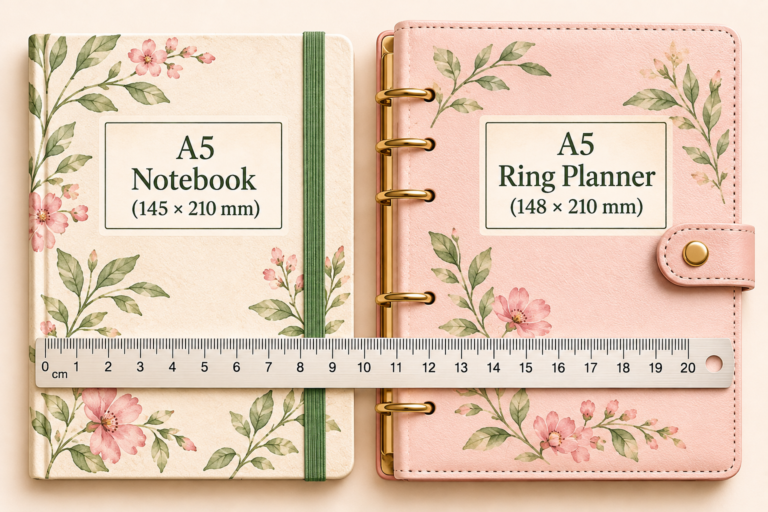
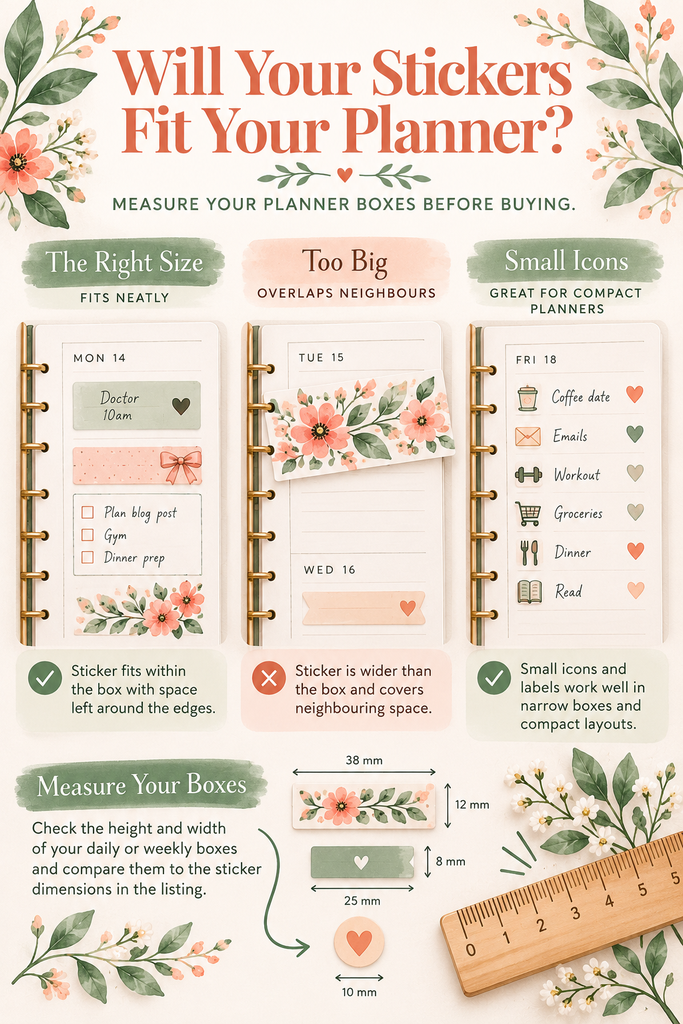
This is the mismatch I see most often. A beautiful sticker that is wider than your daily column simply cannot be used.
Measure your planner’s boxes or columns before you shop. Then compare them with the sticker dimensions in the listing, in millimetres or inches, rather than trusting the photo. If you are still deciding on a planner itself, what size planner do you need walks through the options.
Finish: matte or glossy
Matte stickers are easier to write on and photograph without glare. Glossy stickers look vibrant but can be slippery under a pen, and they show fingerprints.
If you like to add a quick note on or beside a sticker, matte is usually the friendlier choice. Glossy can be lovely for purely decorative accents.
Removable or permanent adhesive
Planners change. A sticker you place in a rush on a Monday may need to move on Wednesday.
Removable or repositionable adhesive is a gift if you plan in pen-and-sticker layouts and hate wasted sheets. Permanent adhesive is fine for decorative touches you will never move. Many listings do not say which they are, so check the description and reviews.
Bleed-through and paper weight
Stickers sit on top of the page, but the adhesive and the printed ink can add weight and, in thin paper, show through on the reverse. If your planner or notebook has lightweight paper, test one sticker on a back page first.
Thicker sticker paper can also make a page bulge in a heavily stickered spread. It is a small detail that matters more the more stickers you use.
Value per sheet
A big price tag does not always mean a big haul. Count the sheets, and then think about how many stickers you will realistically use.
A kit with a lot of tiny repeated icons can last far longer than one with a handful of large, showy pieces. Look at how many usable stickers each sheet gives you rather than the headline number.
🧩 Kits for Minimal and Functional Planners
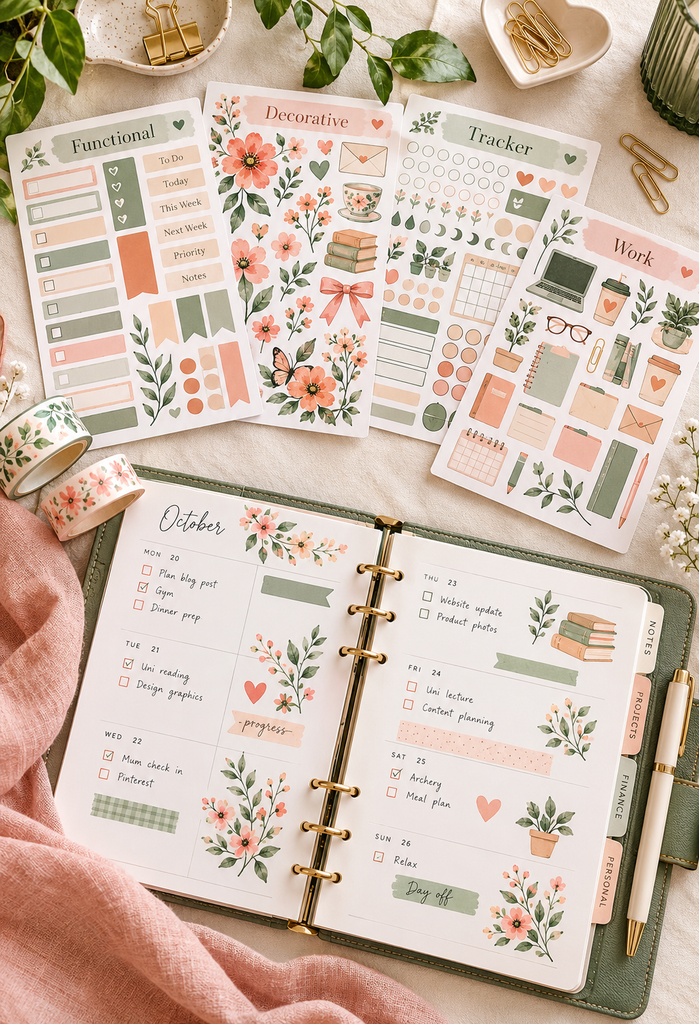
If your planner is mostly for getting things done, you want stickers that save you time. Think small icons for appointments, bills, birthdays, exercise and deadlines, plus date covers and checkboxes.
A functional kit usually contains many small, simple pieces in a limited colour palette. That keeps pages calm and readable, which is the whole point.
What to look for:
- Small, clearly labelled icons you can read at a glance
- A consistent palette so the page does not look cluttered
- A good number of box and label stickers in different widths
- Matte, removable stickers so you can adjust as the week changes
If this sounds like you, a good functional planner sticker multi-pack is the simplest place to begin. Once you have a starter kit, 5 FUNctional spreads you can set up in under 10 minutes shows how quickly the stickers pay off.
🎨 Kits for Decorative and Creative Planners
Decorative planners are about joy as much as organisation. You might theme each month, add seasonal flowers or build pages that feel like little scenes.
For this style, variety is everything. You want a mix of large focal pieces, medium accents and tiny fillers, so you can build a page rather than just dot stickers around it.
Look for:
- Cohesive themes, such as florals, cosy autumn or botanical, that you can mix and match
- A range of sizes, including borders, banners and small corner pieces
- Matte finishes so washi, pens and stamps sit well alongside them
- Enough small pieces to fill gaps
Decorative kits are where the gap between a lovely photo and a usable product is biggest. Check the sticker dimensions and read reviews for comments about print quality and adhesive before you commit.
📓 Kits for Bullet Journals and Trackers
Bullet journalers tend to want flexibility. Your layouts are often drawn by hand, so stickers need to slot in around your own headers, grids and trackers rather than dictate the page.
The best kits for this style include plain label stickers, section headers, habit and mood icons, and small decorative pieces that can sit on a hand-drawn page. Stickers that you can write on are particularly handy for custom trackers.
A few things to bear in mind:
- Go for dot-grid-friendly sizes, so stickers line up with the grid
- Choose blank or semi-blank labels you can personalise
- Pick a palette that suits the pens you already use
- Make sure the paper in your journal can handle the adhesive without buckling
If you are new to this approach, how to bullet journal for beginners is a gentle place to start. For tracker ideas, my guide to mood trackers in your planner or bullet journal shows what you might put them to work on.
🎓 Kits for Work and Student Planners
Work and study planners have a different job. You are tracking meetings, deadlines, assignments, exams and shifts, and clarity matters more than charm.
A colour-coded functional kit is ideal here. You might use one colour for work, one for study and one for personal commitments, so a glance at the week tells you what is coming.
What helps most:
- Clear flags for deadlines, exams, meetings and appointments
- A restrained palette that still looks professional on a desk
- Removable adhesive, because schedules shift constantly
- Small enough stickers to fit tight hourly or daily layouts
If you are planning a school or university year, the ultimate guide to student planners pairs well with a functional kit.
⚠️ Common Mismatches (and How to Avoid Them)
Most disappointing sticker purchases come down to the same handful of mismatches. Knowing them in advance saves money.
A decorative kit in a functional layout
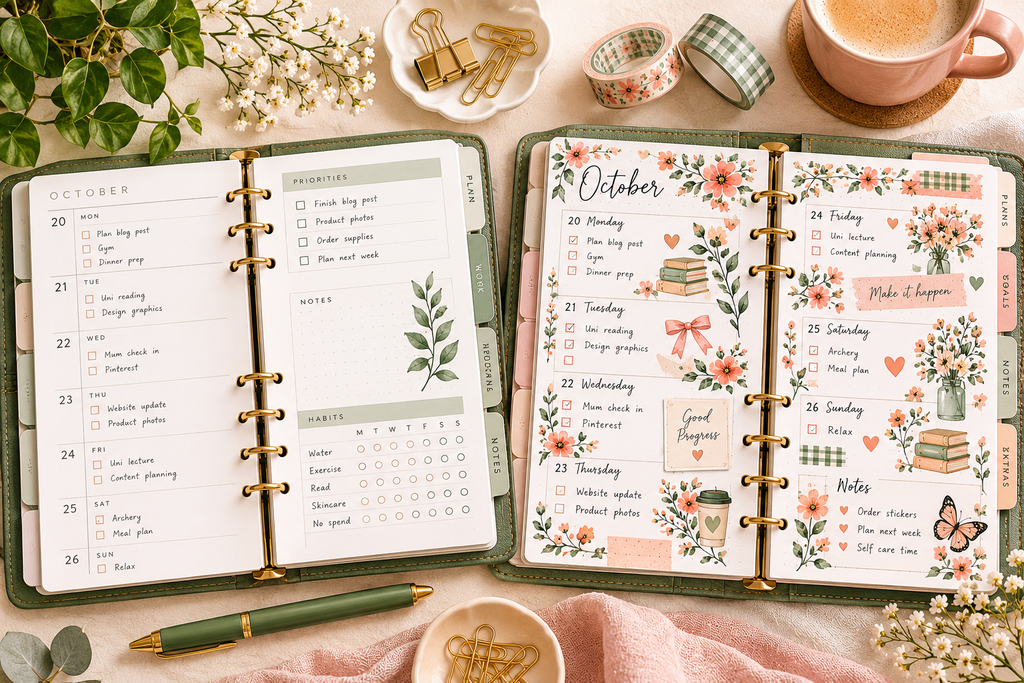
Gorgeous stickers can overwhelm a tight, practical layout. If your pages are packed with tasks, a very decorative kit will fight for space.
The fix is simple. Either choose a functional kit, or keep decorative stickers to one corner or a single weekly header.
Oversized stickers in a compact planner
This is the classic. Large stickers that look glorious in a big journal simply do not fit in a compact planner’s columns.
Check the dimensions before you buy, and if you use a smaller planner, favour kits made up of small and medium pieces. My comparison of A5 versus A6 planners is useful if size is what is holding you back.
Buying for the planner you wish you had
It is tempting to buy for an aspirational style, such as an intricate artistic spread, when your real planning is quick and practical. Be honest about how much time you actually spend on your pages.
You can always add a decorative kit later. A kit you reach for every day is worth far more than one you admire from afar.
Ignoring the paper
Even the right kit can disappoint if your paper cannot cope. Thin pages, heavy ink and strong adhesive can cause buckling or show-through.
Test a sticker somewhere hidden first, especially if you are using a favourite notebook you do not want to spoil.
💰 Getting the Most Value Without Overspending
You do not need the biggest kit on the market. In my experience, a smaller kit that you use to the last sheet beats a giant one that mostly goes unused.
Start with one kit that matches your main planning style. Use it for a month or two and notice which stickers you reach for and which you ignore. That tells you exactly what to buy next, whether it is more of the same or something with a different flavour.
It also helps to think in layers. A functional base kit does the heavy lifting, and a small decorative pack adds seasonal flair when you fancy it. That way you are never paying for stickers that do not suit your layouts.
🛒 How to Pick Your Kit in Five Minutes
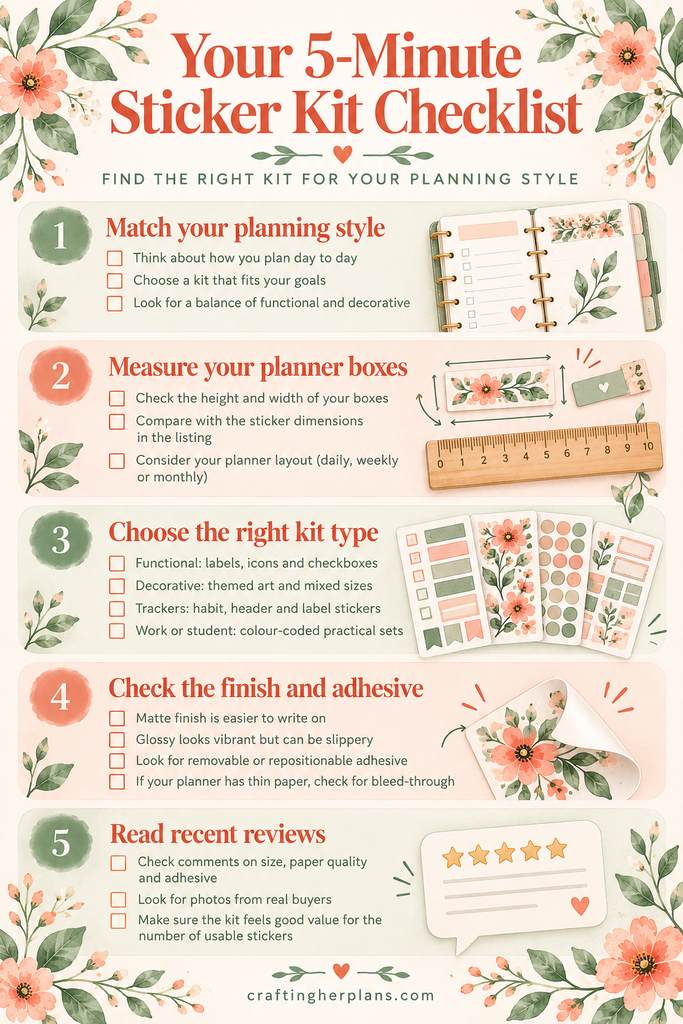
If you have read this far and still feel unsure, run through this short checklist.
- Decide whether your planner is mostly practical, mostly pretty or somewhere in between.
- Measure your planner’s columns or boxes.
- Choose a kit type from the quick-pick table above.
- Check for matte finish and removable adhesive.
- Read recent reviews for notes on print quality and bleed-through.
That is genuinely all it takes. Most of the regret comes from skipping step two.
🌱 Where to Go Next
Once you have a kit you love, the real fun is putting it to use. My FUNctional sticker spreads guide shows you how to build layouts around your stickers, and it is a lovely next step if you went for a functional kit.
If you are still choosing between planning formats, planner sizes: how to find the perfect one will help you get the foundations right first.
The best sticker kit is the one that matches how you really plan. Start small, learn what you reach for, and build from there.