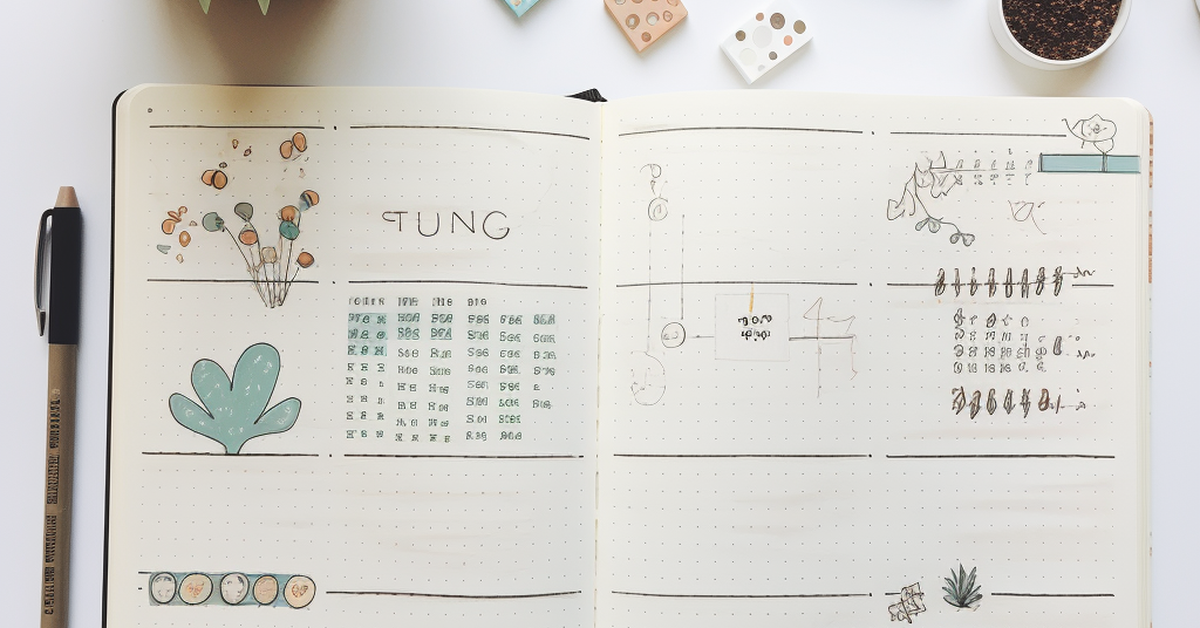
Bullet journaling cracks the code of personal organization, blending the art of jotting down thoughts with the science of productivity. Imagine a system so versatile it fits every lifestyle, whether you’re a student, artist, or entrepreneur. The magic lies in its simplicity: a bullet journal turns the chaos of coordinating your life into a streamlined, tickable checklist that’s entirely customizable.
Ever felt overwhelmed by planners that didn’t quite hit the mark? Bullet journaling sweeps away the cobwebs, offering a clear path to a tidy mind and a tidier schedule. It’s not just about making lists; it’s about tracking progress, recognizing patterns, and carving out a little nook of calm in the daily whirlwind. Critics might say it’s too complicated, but they’ve missed the point—it’s as complex or as simple as you make it.
As we turn the page, you’ll find yourself a step closer to mastering The Basics of Bullet Journaling. This isn’t just another planner—it’s your personal assistant, life coach, and diary rolled into one. You’ll discover the joy of creating something that’s both functional and expressive, a reflection of your unique journey through life’s busy days.

Crafting Her Plans
Ready to plan it all out? We’ve got you.
Head over to the shop for printable planners and journals you can download and start using today.
Browse the shop →The Basics of Bullet Journaling
What Is a Bullet Journal?
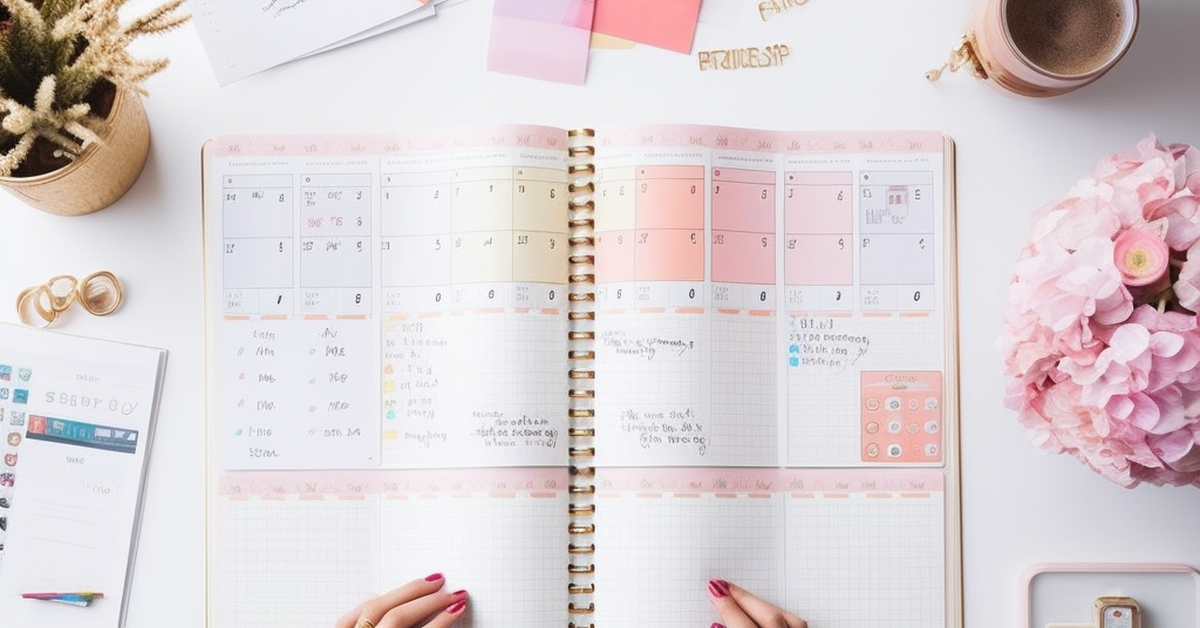
Imagine a system that can morph into a planner, diary, or to-do list at any moment. That’s the bullet journal for you, also known as BuJo. A New York designer birthed the concept, striking a chord with folks craving a customizable organization method. Key elements include the index, logs, and bullets, each serving a distinct purpose. It’s not just about tracking what you need to do but also what you’ve accomplished, offering a holistic approach to task management.
Setting Up Your First Bullet Journal
Starting out, you’ll want a notebook that resonates with your taste. The pen, your trusty sidekick, should glide smoothly for a seamless experience. Kick things off with an index, your roadmap through the BuJo jungle. Then, pencil in a key to decode your tasks, events, and notes. Roll out the red carpet for your logs – daily, monthly, future – to capture life’s symphony one note at a time.
Bullet Journaling Terminology
Navigate the BuJo lingo with ease. Spreads are your canvas – weekly, monthly, whatever your heart desires. Migration? That’s your cue to sift through tasks, relocating the unworthy. Trackers are your silent cheerleaders, tallying habits, moods, or water intake. Master these, and you’re well on your way to bullet journaling bliss.
How to Bullet Journal for Beginners
- Choose Your Weapons: Pick a notebook that feels right and a pen that’s mightier than sword.
- Lay the Groundwork: Index, key, and logs are your foundation stones.
- Speak BuJo: Get comfy with terms like ‘spread’, ‘migration’, and ‘tracker’.
Bullet Journal Basics Table
| Element | Purpose | Details |
|---|---|---|
| Index | Navigation | Lists all your content with page numbers. |
| Key | Symbols guide | Helps you quickly identify tasks, events, notes. |
| Logs | Record keeping | Daily, monthly, and future planning sections. |
| Spread | Layout | Customizable pages for various tracking needs. |
| Migration | Task management | Moving uncompleted tasks forward. |
| Tracker | Habit recording | Monitors habits, moods, other personal metrics. |
Remember, it’s your world to paint; there are no must-dos, only could-dos. And as you turn the page, you’ll find yourself inching closer to a layout that mirrors your mind’s eye, one not bound by rules, but buoyed by creativity.
Planning Your Bullet Journal Layout

Kickstart your journey into bullet journaling with a solid plan for your layout. Whether you fancy minimalism or artistic flair, it’s all about striking the right balance. After all, your journal’s design should not only please the eye but also ramp up its usefulness.
Here’s a scoop on crafting that perfect layout:
- Go minimalist if simplicity is your jam, or jazz it up with colors and doodles if you’re feeling artsy.
- A layout that’s both pretty and practical is like a cherry on top.
- Find inspiration all around you. Nature, art, or even a snazzy planner from Crafting Her Plans could get those creative juices flowing.
Designing Your Bullet Journal Layout
Choices, choices: minimalist or artistic? Both have their charms. The aim is to marry beauty with function, creating a space that’s not just a feast for the eyes but a powerhouse of productivity. Hunting for layout inspo? Look no further than the vibrant pages of the Crystal Planner and Journal.
Monthly and Weekly Spreads
Imagine a bird’s-eye view of your month with a monthly log, then zoom in for the nitty-gritty with weekly spreads. Tailor these to your rhythm, and watch your planning game level up.
Let’s break it down:
- Monthly log: Capture your month at a glance.
- Weekly spreads: Plan the week with precision.
- Customize: because one size does not fit all.
Daily Entries and Rapid Logging
Every day’s a new page. Rapid logging? It’s a bullet journaling staple. Keep your daily logs lean and mean for peak efficiency. Time-blocking and task batching? Game changers.
Here’s what to remember:
- Rapid logging keeps you nimble.
- Daily structure is your best friend.
- Time-blocking and task batching? They’re your secret weapons.
Now, you’ve got the basics to start your creative journaling adventure. Soon you’ll be adding your own twists and tweaks. It’s a given, once you’re in the groove, you’ll find ways to make your journal uniquely yours. Who knows, maybe you’ll sprinkle in some memories or track habits to paint a full picture of your days.
Remember, as you flip through the pages of your bullet journal, you’re not just organizing tasks. You’re crafting a story, your story, one day at a time.
Personalizing Your Bullet Journal
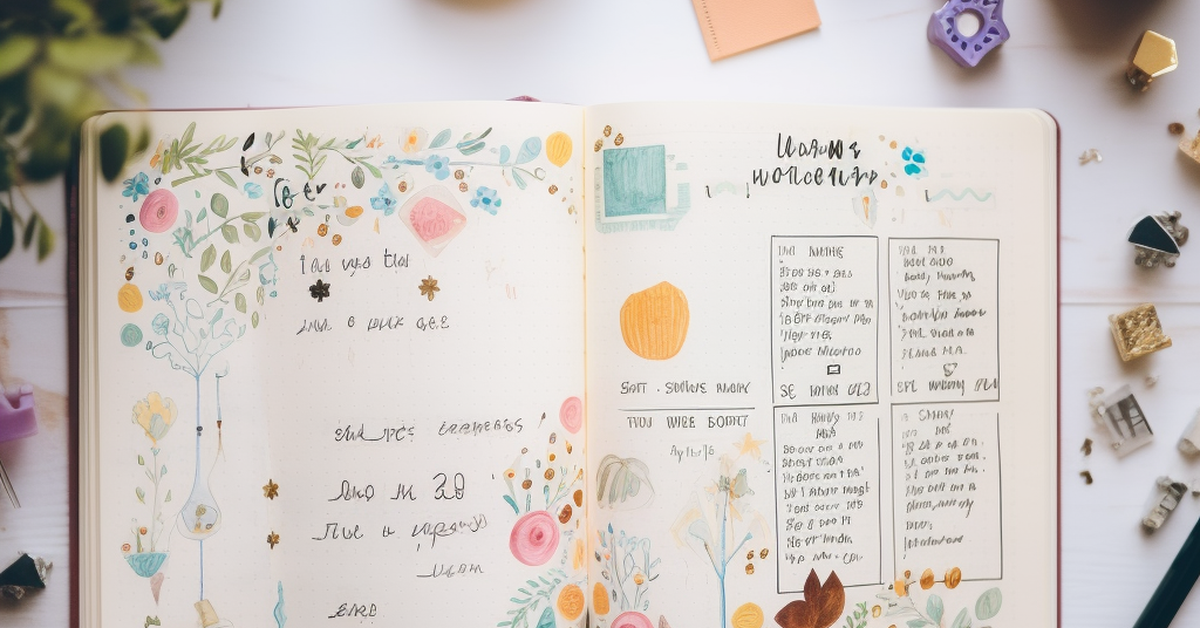
Starting a bullet journal is like embarking on a journey of self-discovery and organization. This unique system, crafted by Ryder Carroll, has swept across the globe, helping people capture their thoughts and tasks creatively. If you’re new to this world, worry not. Here’s your guide to making your bullet journal truly yours.
Thematic Designs and Creative Touches
- Incorporate themes in your monthly setups to keep things fresh. Whether you’re into floral designs or a space odyssey, themes add personality.
- Doodles, stickers, and washi tape aren’t just fun; they make your pages pop. They can also serve as visual cues for different tasks or events.
- Seasonal and event-based themes keep your journal in sync with your life. Think pumpkins for October or snowflakes for January.
Here are some theme ideas to get you started:
- January: Snowy Wonderland
- February: Love and Hearts
- March: Spring Awakening
- April: Rain Showers and Umbrellas
- May: Blooming Flowers
- June: Beach Vibes
- July: Stars and Stripes
- August: Tropical Paradise
- September: Back to School
- October: Spooky Halloween
- November: Thankful Harvest
- December: Winter Holidays
Collections and Custom Pages
- Creating collections helps organize your thoughts. From wish lists to project steps, collections are your best friends.
- Design custom pages for tracking habits or jotting down book titles. These pages turn your bullet journal into a life dashboard.
- Organize your ideas with collections. They’re perfect for brainstorming sessions or tracking long-term goals.
| Custom Page Type | Purpose |
|---|---|
| Habit Tracker | Monitor daily practices |
| Reading Log | Keep a record of books |
| Project Tracker | Follow project progress |
| Gratitude Log | Reflect on daily joys |
| Expense Tracker | Manage your finances |
| Fitness Planner | Track workouts and health |
Reflection and Mindfulness in Bullet Journaling
- Gratitude logs foster a positive mindset. Even on rough days, jotting down little wins can lift your spirits.
- Mindfulness practices within your bullet journal bring calm to the chaos. They remind you to breathe and be present.
- Balance productivity with mental wellness. Your bullet journal should be a tool for peace, not pressure.
I remember when I first started my bullet journal. It was a game-changer, helping me not only organize my tasks but also giving me space to reflect and grow personally. With each page, I found a sense of accomplishment and peace.
Now, before we wrap up, let’s ponder on this: life is a canvas, and your bullet journal is the palette. Imagine painting your days with vibrant tasks and soft-hued reflections. Pretty neat, right? Next time we meet, we’ll explore how to keep that canvas fresh and exciting, with practical tips and tricks. Stay tuned for more creative ways to enhance your journaling experience, and remember, your bullet journal is a reflection of you—make it unique, make it yours!
Crafting Her Plans is a treasure chest of resources for your bullet journaling adventure. Whether you’re looking for a new planner or some creative inspiration, they’ve got your back. Check out their collection and start crafting your plans today!
Bullet Journaling Tips and Tricks

Have you ever felt overwhelmed with your daily tasks and struggled with organization? You’re not alone. Bullet journaling may be just what you need to streamline your life. It’s a method that combines planning, tracking, and journaling to help you make the most of each day.
Let’s look at some practical tips and tricks to get you started.
Time-Saving Techniques for Busy Individuals
Bullet journaling doesn’t have to be time-consuming. With these strategies, you can simplify the process:
- Quick-setup layouts and stencil use: Stencils can speed up the creation of your bullet journal layouts. They help with drawing consistent shapes and lines, which saves time and keeps your pages neat.
- Utilizing printables and pre-made inserts: If drawing isn’t your thing, printables are a lifesaver. Sites like Crafting Her Plans offer a variety of printable planners that you can stick directly into your bullet journal.
- Digital tools to complement your bullet journal: Apps can synchronize with your journaling efforts. Think of them as your digital backup.
Overcoming Common Challenges
Starting a bullet journal can be daunting. Here are solutions to common roadblocks:
- Dealing with perfectionism and the fear of starting: Remember, your bullet journal is for you. It doesn’t need to be perfect. It’s a work in progress, just like you.
- What to do when you miss days or fall behind: Just flip to a new page and start afresh. Your bullet journal is forgiving.
- Adapting the bullet journal system during life changes: Your journal is flexible. It can evolve as your life does.
Expanding Your Bullet Journal Practice
To grow in your bullet journal journey, consider these ideas:
- Resources for continuous learning and inspiration: Websites and online communities are a treasure trove of ideas. Bulletjournal.com is a great place to start.
- Joining bullet journal communities and groups: Platforms like Reddit have vibrant communities that share tips and offer support. Check out discussions on how to start a bullet journal.
- Integrating bullet journaling into other planning systems: Don’t be afraid to mix bullet journaling with other methods that work for you. It’s all about personalization.
| Quick Tips | Description |
|---|---|
| Start with an index | Helps you find things quickly. |
| Key symbols are your friends | They categorize your entries at a glance. |
| Monthly logs give you an overview | Plan your month and see important dates. |
| Daily logs are for the nitty-gritty | Write down everyday tasks and notes. |
| Collections keep related things together | Group projects, books to read, or long-term goals. |
Bullet journaling is more than just keeping a to-do list. It’s about understanding your priorities, recognizing your progress, and even finding small moments of joy in everyday life. If you’re just beginning, I remember feeling a mix of excitement and uncertainty when I first started my bullet journaling journey. But soon, it became clear that this was more than an organization tool; it was a canvas for my life.
As you move ahead with your new system, consider how you can expand your practice. Maybe you want to incorporate mindfulness exercises or track your fitness goals. The possibilities are endless. Soon, you’ll find that your bullet journal is not just a planner, but a personal hub where you can creatively manage your life, reflect on your experiences, and dream about the future.
Advanced Bullet Journaling Techniques

Ready to step up your journaling game? In this guide, you’ll learn how to use a bullet journal for more than just keeping track of tasks. You’ll see how it can become a powerful tool for creativity and personal growth.
Tracking and Analyzing Your Habits and Goals
Bullet journaling isn’t just about crossing off to-do lists. It’s also a fantastic way to keep a close eye on your habits and work towards your big dreams.
- Setting up advanced trackers for habits and goals can be a game-changer. You might have a habit tracker for a month where you jot down when you drink water or exercise.
- Notice patterns in your behavior by analyzing your entries. Maybe you’re more productive on days when you start with meditation.
- Long-term goal planning fits right into your bullet journal. Chart out the steps to reach those goals and check in regularly.
| Habit | Frequency | Notes |
|---|---|---|
| Water Intake | 8 glasses | Feeling better |
| Morning Yoga | 5 days/wk | More energized |
Creative Writing and Art Journaling
Who says bullet journals are only for lists? Let’s get creative!
- Mix in elements of creative writing. Pen a short story or poem when inspiration strikes.
- Use your bullet journal for sketches and art. Draw something that captures your mood or an event from the day.
- Balance your journal with text and visuals. A page might have your thoughts on one side and a drawing on the other, making your journal a treat for the eyes as well as the mind.
Bullet Journaling as a Tool for Personal Growth
It’s your journey, in your hands. Literally.
- Record personal achievements and milestones. Got a promotion? Write it down and celebrate your progress!
- Use your journal to focus on self-improvement. Reflect on what you’ve learned each day or week.
- Look back at old bullet journals. They’re a goldmine for insights on growth.
Bullet journaling can be a profound tool for managing your life and achieving personal growth. It’s about making your journal work for you, whether that’s by tracking your habits, unleashing your creativity, or documenting your journey through life.
If you’re itching to start your own bullet journal, but you’re not sure where to begin, you’re in luck. Crafting Her Plans offers an incredible Turquoise Travel Printable Planner that’s perfect for beginners. It provides a structured yet flexible framework that helps you keep track of your adventures, both on paper and in life.
Your bullet journal is more than a planner. It’s a living document of your life, a space for your thoughts, dreams, and plans. As you continue to fill its pages, you’ll find yourself moving ever closer to the person you’re meant to be.
Conclusion: Starting Your Bullet Journal Journey
Well, you’ve seen the ropes, and it’s clear: bullet journaling’s not just another fad. It’s a powerhouse for sorting your thoughts, keeping track of your bustling days, and setting goals you’ll actually tick off. Our Crafting Her Plans site is brimming with nifty planners and journals, all set to guide you on this new adventure. Imagine flipping through your own Coffee Planner, its pages filled with your achievements and dreams – how cool would that be?
Now, why not grab a journal and jump in? Start with a simple dot grid notebook from our collection. Sketch out your future, jot down what’s got you revved up, and share your bullet journal journey with the community. Folks are eager to see your progress, and who knows, you might just inspire someone else to kickstart their own story. And hey, while you’re at it, pop over to our site to peek at our bullet journal prompts. They’re perfect for keeping your creativity on its toes. So, which planner will you pick to kick off your journey? Let me know which one’s caught your eye, and let’s make this year unforgettable, together. Bold plans await!
Frequently Asked Questions about How to Bullet Journal for Beginners
What is a Bullet Journal?
A Bullet Journal is a customizable and flexible organization system that combines planning, note-taking, tracking, journaling, and to-do lists. It was created by Ryder Carroll and is often abbreviated as “BuJo.” It uses a methodical system of bullets, symbols, and indexes to help users organize their lives in a concise and streamlined manner.
What materials do I need to start a Bullet Journal?
To begin bullet journaling, all you need is a notebook and a pen. Some people prefer dotted or grid notebooks to help with layout alignments, but any notebook will do. While many enthusiasts like to use colored pens, markers, highlighters, or washi tape for decoration, these are optional and not necessary for the basic functionality of a Bullet Journal.
How do I set up my Bullet Journal?
Start by creating an index at the beginning of your notebook. This will serve as your table of contents. Then, set up a Future Log to note down events or tasks that are coming up in future months. After that, create a Monthly Log, which serves as your monthly calendar and task list. Finally, the Daily Log is where you’ll list your daily tasks, events, and notes. Some people also include a Weekly Log for a more detailed weekly overview.
What symbols should I use in my Bullet Journal?
Ryder Carroll’s original system uses a simple set of symbols known as “signifiers.” A bullet point (•) represents tasks, a circle (○) for events, and a dash (–) for notes. You can also use an “X” to mark tasks as completed, “>” to signify migration (moving a task forward), and “<” for scheduling (moving a task to the Future Log). Customizing your symbols is encouraged to suit your personal preferences.
How do I make my Bullet Journal look neat?
To keep your Bullet Journal neat, start by writing in a clear and consistent manner. Use rulers or stencils to create straight lines and boxes if needed. Stick to a simple color scheme or use only black ink to maintain a cohesive look. Make sure to leave margins and space between entries for clarity. Over time, you’ll find a layout that works best for you.
How much time does it take to maintain a Bullet Journal?
The time spent on maintaining a Bullet Journal varies from person to person. It can take as little as 5-10 minutes a day to update your Daily Log and check off completed tasks. Setting up monthly logs typically takes a bit longer, perhaps 20-30 minutes at the start of each month. Remember, the system is meant to save you time by keeping you organized, so it should not become a burden.
Can I combine digital planning with a Bullet Journal?
Yes, you can combine digital planning tools with a Bullet Journal. Some people use digital calendars for scheduling and reminders, while using their Bullet Journal for more detailed planning, tracking habits, or jotting down thoughts and ideas. Find a balance that works for you and integrates seamlessly with your lifestyle.
What if I make a mistake in my Bullet Journal?
Making mistakes is a natural part of the learning process. If you make a mistake, you can simply cross it out and rewrite it, use correction tape, or even cover it with a sticker or piece of washi tape. Some bullet journalers embrace mistakes as part of their journal’s character. Remember, the Bullet Journal is a personal tool, and perfection is not the goal.
How do I know what collections to include in my Bullet Journal?
Collections are personalized pages that relate to specific interests, projects, or tracking needs, such as books to read, workout logs, or meal planning. Include collections that are meaningful to you and support your goals. Start with a few basic collections and add more as you identify other areas you’d like to track or organize.
What’s the best way to stay consistent with bullet journaling?
To stay consistent with bullet journaling, make it a habit. Set aside a few minutes each day to update and review your journal. Keep it simple at the start to avoid feeling overwhelmed. As you get more comfortable, you can add more complexity if desired. Use your Bullet Journal as a tool to manage your time and tasks, and find motivation in the personalization and productivity it brings to your life.