

Ever found yourself at a crossroads, torn between the allure of sleek digital planners and the timeless charm of paper planners? Which one truly holds the key to unlocking your best organized self? It’s a showdown for the ages: Digital Planner vs Paper Planner. In this modern era of tech-savvy solutions, could it be that old-school pen and paper still reign supreme?
The Tale of Two Planners
The quest for productivity has led us down many paths, with each turn offering new methods to capture our daily chaos. On one hand, we have digital planners—those shiny beacons of technological advancement that sync with every device you own. They whisper promises of endless customization and accessibility from anywhere in the world.
Then there’s their counterpart—the humble paper planner, exuding an air of nostalgia wrapped in leather-bound covers or vibrant artistic designs. These tangible companions offer a sensory experience as you physically cross off tasks, feeling every accomplished stroke.

Crafting Her Plans
Ready to plan it all out? We’ve got you.
Head over to the shop for printable planners and journals you can download and start using today.
Browse the shop →A Seamless Transition to Tech or Tradition?
As we ponder which planning path to take, let us not forget that this isn’t just about preference—it’s about performance. Will tapping on screens and clicking buttons elevate your efficiency? Or does the act of writing by hand etch your intentions deeper into memory? The answer isn’t straightforward; it dances somewhere in between pixels and pages. So stay tuned as we delve deeper into “The Rise of Digital Planners” where we’ll weigh their bits and bytes against ink and intuition—no CTA needed here; just pure exploration awaits!
The Rise of Digital Planners
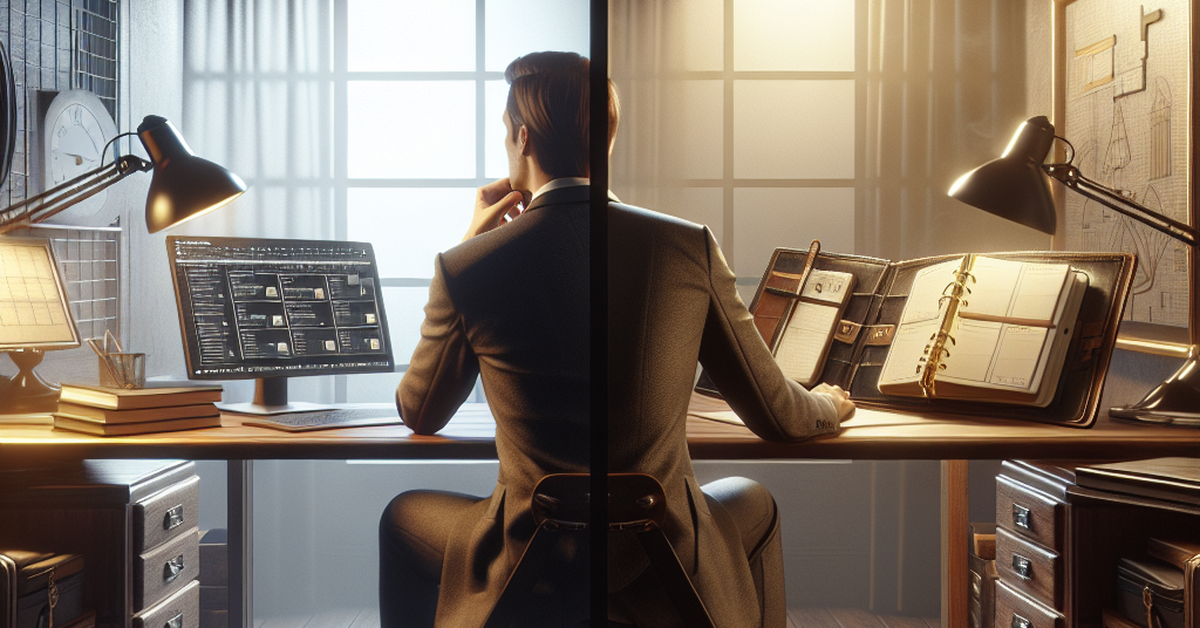
Ah, the age-old debate: to go digital or stay traditional with your planning? It’s like choosing between a trusty old friend and that shiny new acquaintance who promises the world. Let’s crack open this can of worms and see what all the fuss is about with these digital planners.
Understanding Digital Planning Platforms
In this veritable candy store of digital planning platforms, each app and software offers a unique flavor of organization. Let’s start with Google Calendar, a versatile tool that not only manages your schedule but also sends reminders and allows for shared event planning.
Then there’s Asana, a project management powerhouse perfect for team collaborations, where you can assign tasks, add deadlines, and track progress. For those who crave a more visually appealing planner, Trello’s card-based system might be just the ticket. It allows you to create boards for different projects, add checklists, labels, and more.
And let’s not forget about Evernote, the digital notebook that lets you jot down thoughts, save articles, and even clip web pages. With these options and more, finding your perfect digital planning companion is a journey filled with rich choices, each with their own unique selling points.
The Power of Synchronization, Cloud Storage, and Cross-Device Access
One of the indisputable advantages of digital planners is their superior synchronization capabilities. Imagine updating your schedule on your phone while munching on breakfast cereal, and then, like magic, it appears on your laptop when you reach work. That’s the beauty of sync features; they’re like little productivity fairies, ensuring that your latest updates are always reflected across all devices.
Furthermore, cloud storage provides an additional layer of convenience and security. Gone are the days of physical clutter or fear of losing important documents. The cloud safely stores your information and allows you to access it from any device with an internet connection. This cross-device access ensures that your planner is always at your fingertips, whether you’re using your smartphone, tablet, or laptop.
These features embody the crux of digital planning– seamless integration into your daily life, and the ability to adapt and update your plans on the go.
Advantages of Going Digital with Your Planner
- Real-time Updates: One of the most significant benefits of using a digital planner is the ability to implement real-time updates. This feature is incredibly useful for scheduled meetings or deadlines that could change at the last minute. As soon as you update a time or date, everyone involved will be notified instantly. This means you spend less time communicating changes and more time focusing on the tasks at hand.
- Integration with Other Apps: Digital planners often can integrate with a multitude of other applications, creating a seamless user experience. For example, your fitness app can sync with your digital calendar, allowing you to visually track your exercise routine alongside your work schedule. This level of integration encourages a well-rounded, organized lifestyle, merging various aspects of your daily routine into a single, manageable platform.
Challenges Associated with Digital Planners
Despite the myriad advantages of digital planners, they are not without their drawbacks. One major concern is the dependency on technology. Imagine being caught in a situation where you have to refer to your schedule, but you can’t due to a dead battery or lack of internet connection. The fear of being left staring at a frozen screen when you’re supposed to be ticking off tasks is real and can be incredibly frustrating.
Plus, there are always looming threats in the digital realm such as cyber-attacks or system glitches that could compromise your planning platform, causing loss of data or unauthorized access. Another concern circles around privacy issues. As our lives become more digitized, the amount of personal data we put online increases. This data can potentially be accessed by hackers, leaving your well-planned life exposed to prying eyes.
Digital platforms often employ security measures to protect user data, but no system is entirely foolproof. Therefore, it’s crucial to be aware of these potential risks when choosing to go digital with your planner.
Customization and Flexibility in Digital Planning
Personalizing Your Digital Space
One of the exciting aspects of digital planners is the opportunity to truly make it your own through themes, templates, and personal branding. This is a chance not just to organize your life, but to do so in a way that reflects your style and personality. Many digital planning platforms offer customizable themes, allowing users to select colors, patterns, and images that they find appealing. You may choose vibrant hues that infuse energy into your day or opt for calming pastel shades to create a soothing workspace. The choice is truly yours.
Templates offer another level of customization. These ready-made layouts can save you time and effort, but they can also be adjusted to fit your unique needs. Whether you want a detailed daily layout or a broader weekly overview, you can find a template that works for you.
Personal branding takes this customization even further. Some digital planners allow you to incorporate your brand’s logo, fonts, and color palette, creating a consistent look and feel across all your digital platforms. This not only adds a professional touch but can also promote brand recognition and loyalty. Thus, with a digital planner, you’re not just organizing your tasks and events—you’re doing so in a way that is uniquely you.
Adapting to Different Needs
Digital planners offer immense flexibility to adapt according to the user’s role and specific needs. For students, these planners can be a lifesaver. They can utilize templates designed for academic planning, tracking assignments, exam dates, and study schedules. Digital planners can even help manage extra-curricular activities, ensuring a healthy balance between studies and personal interests. They can choose fun and vibrant themes, adding a touch of personal flair to their planner.
On the other hand, for professionals, digital planners offer a suite of features that can streamline their workday. They can choose templates that track meetings, project deadlines, business trips, and more. Integration with other professional apps like email, project management, and video conferencing platforms makes it a central hub for all work activities. Professionals can also opt for more formal and minimalist themes to match the professional environment, and even incorporate their company’s branding for a consistent look.
Thus, whether you’re a student juggling classes and extracurriculars, or a professional managing multiple projects and meetings, there’s a digital planner template tailor-made for you. Customize it to your liking and turn each day from “meh” to “heck yeah!” in your planning journey.
Now let me tell ya’, as we wrap up this techno-savvy discussion about going full-on Jetsons with our schedules (The Enduring Appeal of Paper Planners), remember one thing: no matter which side you pick in this epic battle between pixels vs paper—your plans are yours alone. So gear up whichever way tickles your fancy!
And hey! If curiosity has got the better of you about these snazzy digital tools I’ve been yapping about—why not check out some digital planners right here? Go ahead; give ’em a whirl!
The Enduring Appeal of Paper Planners

Ah, the classic paper planner. It’s like that cozy sweater you can’t part with—reliable, snug, and oh-so-comforting in its familiarity. In a world where screens dominate our lives, there’s something rebelliously quaint about flipping open a physical book to jot down your plans.
Traditional Planning Methods Revisited
Remember when planning was as simple as scribbling on a piece of paper? Those were the days! With paper-based planning, you get to touch and feel your schedule—literally. There’s no pinging notification or screen glare to wrestle with; just you, your pen, and endless possibilities spread across those crisp pages.
Sensory Experience & Memory Retention
- Studies suggest that writing by hand improves memory recall.
- Handwriting activates brain regions involved in thinking and working memory.
No Tech Required
You’re on a remote island getaway (work with me here), and bam! Your digital calendar is as good as a chocolate teapot without Wi-Fi. But lo and behold, your trusty paper planner needs no batteries or signals—it’s always on duty!
Creativity and Expression through Paper Planning
Let’s talk about turning bland into grand. A paper planner isn’t just for appointments; it’s a canvas for your creativity. Stickers? Washi tape? Doodles? Bring ’em on! Personalize each page until it screams “you.”
Making It Yours
Your planner could be mistaken for an art journal with all those colors bursting from the margins. And why not? If it sparks joy and gets you pumped for Monday (a miracle in itself), then decorate away!
Reflective Practice & Journaling Integration
Many folks find solace in their planners doubling up as diaries—a space where daily reflections nestle beside to-dos. It’s therapeutic, really; one minute you’re ticking off tasks, the next you’re pouring out thoughts that would make Socrates nod approvingly.
Now let’s shimmy over to the edge of this topic before we leapfrog onto comparing usability—which we won’t actually do today but imagine how fun that would be! Just picture yourself armed with insights from both worlds: the tactile charm of paper planners versus the sleek efficiency of digital ones… But hey, if I’ve tickled your fancy enough already about these organizational sidekicks at Crafting Her Plans, why not check out their selection of printable planners ready to help keep track of life’s little (and big) moments?
And remember: whether it’s etching hieroglyphs onto stone tablets or tapping away at futuristic devices—we humans have always found ways to plan our time. So go forth with either pen or pixels—or both—and conquer your day like the planning powerhouse you are!
Comparing Usability: When to Choose Which?

Alright, party people! Let’s talk planners. You’ve got your sleek digital planner on one side and the classic paper planner on the other. It’s like choosing between a shiny new smartphone and a trusty old notebook. But when it comes to keeping your life organized, which one wins the crown? Let’s break it down!
Accessibility & Convenience Factors
Digital Planner: Picture yourself sipping coffee at your favorite café. A thought pops up – “Did I schedule Aunt Gertrude’s birthday bash?” With a digital planner, you whip out your phone faster than a ninja, and bam! The info is right there. Digital planners are like having a personal assistant in your pocket – always ready, unless you’re out of juice (battery or coffee).
Paper Planner: Now imagine this – you’re chilling in the park under an old oak tree, no charging outlets in sight. Your paper planner doesn’t care about electricity; it’s just there for you, rain or shine (though preferably shine). It’s tangible, real, and won’t go black if dropped in a puddle.
Immediate Access vs. Constant Availability
- Digital: Instant access is king with digital planners as long as you’re powered up.
- Paper: Paper planners don’t need Wi-Fi or batteries; they’re good ol’ reliable.
Data Management & Organization Capabilities
Digital Planner: These bad boys are search engines for your life. Need to find that note about the vet appointment? Type it in and voilà! Plus, backup options mean your plans survive even if your device takes an unexpected swim.
Paper Planner: There’s something magical about flipping through pages filled with handwritten notes and colorful stickers marking milestones. Sure, there’s no ‘Ctrl+F’ feature here but leafing through memories has its own charm.
Editing Ease vs. Permanent Records
- Digital: Made a mistake? No worries! Edit away without leaving any evidence behind.
- Paper: Mistakes on paper are part of the journey – each strikethrough tells a story.
Now let me tell ya’, I once tried juggling both types of planners because why not have double fun? Turns out my paper planner was perfect for brainstorming sessions where ideas flowed like lava from my pen onto those crisp pages—no lagging or loading screens involved!
But hey, before we jump into how we can mix chocolate with peanut butter (aka hybrid planning systems), let me drop some knowledge bombs on ya’. Did you know that writing things down by hand actually helps improve memory retention? That’s right! Scribbling down tasks gives them weight—makes them stick like gum under a school desk (gross but true).
So whether you’re tapping away reminders into Google Calendar or doodling deadlines next to cartoon avocados in your bullet journal—each method has its perks!
And remember folks: Crafting Her Plans offers all sorts of planners that could be just what you need to get started on either path—or both if you’re feeling adventurous!
Now hold onto your hats because we’re sliding smoothly into our next topic: Integrating Both Worlds: Hybrid Planning Systems…
Integrating Both Worlds: Hybrid Planning Systems

Hey there, organization aficionado! You’re probably here because you’ve got a calendar crammed with reminders and a to-do list that’s longer than a CVS receipt. But the real question is, are you team paper planner or team digital planner? Or maybe you’re curious about mashing them up into one super-system? Well, buckle up, buttercup, because we’re about to dive into the world of hybrid planning systems!
Benefits of Combining Digital & Paper Planners
By adopting a hybrid planning system, you get the best of both worlds. For instance, when you’re brainstorming for a massive project, nothing beats the tangibility of a paper planner; it allows you to jot down thoughts rapidly, sketch ideas, or scribble down mind maps. You’re not limited by the structure of a digital tool, and this fluidity can fuel creativity.
On the other hand, using a digital planner can be indispensable for setting up reminders for important meetings or deadlines. It can send you alerts, synchronize across your devices, and be accessed wherever you are, making sure you never miss an important date.
Imagine preparing for a presentation. You could use your paper planner to draft the structure, key points, and ideas, then transfer these into your digital planner to create a detailed agenda, allocate time for each section, and set reminders for the preparation progress.
The synergy between the tactile experience of paper and the technological convenience of digital planning provides a versatile system that accommodates various needs and preferences, supporting your productivity in a balanced way.
Complementing Strengths
Digital planners are fantastic for those oh-so-important reminders and sharing events with others (hello family calendar!). They sync across devices faster than you can say “I’m late!” But let’s not forget our trusty paper planners. There’s something almost therapeutic about writing by hand—it helps cement those plans in your brain. Plus, no screen time means giving your peepers a break from the digital world.
Strategies for Effective Hybrid Planning
Now let’s talk strategy. To avoid double booking yourself or missing out on Aunt Edna’s 90th birthday bash (trust me, she won’t let it slide), make sure your digital and paper planners play nice together. Set aside some time each week for a planning pow-wow where you update both systems.
Tools & Techniques for Synchronization
One nifty trick is using color-coding or symbols that work across both platforms—like a little airplane for travel days or a happy face for gym days (or grimace if leg day isn’t quite your thing). And hey, why not snap pics of your paper planner pages to store in your digital planner? That way, they’re just a tap away when you’re out and about.
Alrighty-roo! Now that we’ve covered how to juggle these two planning powerhouses without dropping the ball—or the pen—it’s time to wrap things up here. Remember folks: whether it’s scribbling down ideas with ink-stained fingers or tapping away at lightning speed on your device; find what works best for you. And as we look ahead towards ‘Future Trends in Personal Organization Tools’, remember that staying organized is always in style—no matter which tools you choose!
Future Trends in Personal Organization Tools
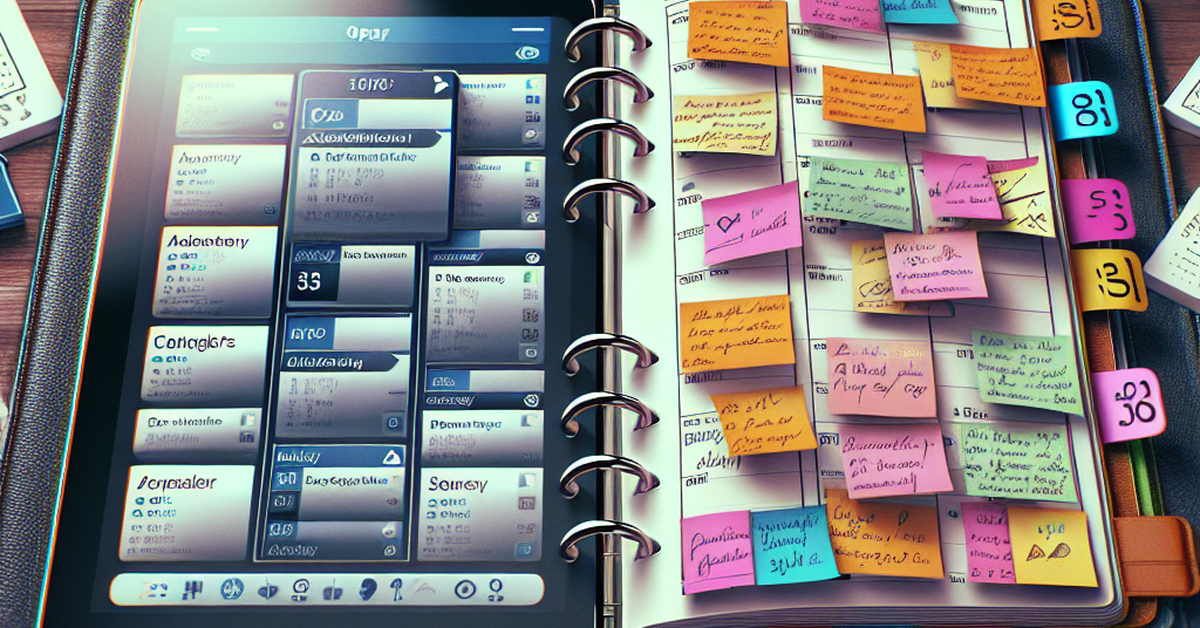
Hey there, organizational maestro! Are you ready to peek into the crystal ball of planning? Let’s talk about future trends in personal organization tools that might just blow your Post-its out of the water.
Technological Innovations Impacting Planners
The tech world is buzzing like a beehive on a sunny day, and it’s got some sweet honey for planners. We’re talking about innovations that could turn your digital planner from a simple calendar to Iron Man’s Jarvis. Imagine telling your device, “Plan my day,” and voila! It schedules meetings, reminds you to water the plants, and even pencils in some me-time.
AI Assistance & Automation Features
Let’s get sci-fi with it! Artificial Intelligence (AI) isn’t just for robot movies anymore. We’re looking at potential AI integrations that could make digital planning smarter than ever. Think predictive text on steroids—your planner might suggest tasks before you even think of them based on past behavior. “Did you forget Aunt Edna’s birthday again? Don’t worry; I’ve already sent her an e-card!” That’s right; future planners could help us dodge those awkward family moments.
Sustainability Considerations in Planner Choice
Now let’s chat about Mother Earth for a sec because she deserves our love too. When choosing between paper or pixels for your planning needs, sustainability is becoming more than just a buzzword—it’s a lifestyle choice!
Eco-Friendly Materials vs. Energy Consumption
It’s the classic showdown: eco-friendly materials duking it out with energy consumption. On one hand, we’ve got paper planners waving their recycled-paper flags high and proud. But wait—digital devices counter with their low-energy e-ink displays that sip power like a fine wine rather than guzzling it down.
So what does this mean for you? Well, if you’re rocking a paper planner, kudos for keeping it classic and potentially recyclable! But if you’re all about that digital life, rest easy knowing tech giants are working tirelessly to reduce the carbon footprint of our beloved gadgets.
And now, as we wrap up this whirlwind tour through the futuristic landscape of personal organization tools…
…we find ourselves at an exciting crossroads where innovation meets intentionality. Whether you lean towards scribbling or swiping when organizing your life, remember: The best system is one that works uniquely well for you. So go ahead and choose your champion—be it paper or pixel—and may your days be as organized as Marie Kondo’s sock drawer!
Ready to take action? Check out Crafting Her Plans’ selection of printable planners designed with both style and sustainability in mind—a perfect blend as we transition into tomorrow’s planning paradigms!
Conclusion: Selecting Your Ideal Planner Solution
In the bustling world of planners and journals, it’s clear that the debate between digital planner vs paper planner is more than just preference—it’s about finding your perfect match in organization. At Crafting Her Plans, we get that you’re looking for a system that not only keeps up with your dynamic lifestyle but also sparks joy in the art of planning. Whether you’re a student sketching out your academic journey, a professional mapping out career milestones, or an entrepreneur plotting business growth, our printable planners are designed to be your trusty sidekick.
Key Takeaway:
The secret sauce to mastering life’s complex recipe is having the right tools at your fingertips. Our collection caters to every facet of your day-to-day—from bullet journals that capture bursts of creativity to travel planners that make adventures unforgettable. Remember, it’s not just about managing tasks; it’s about crafting memories and carving pathways to success.
Frequently Asked Questions about Digital Planner vs Paper Planner
What are the main differences between a digital planner and a paper planner?
The primary difference lies in their format: digital planners are electronic and typically used on devices like smartphones, tablets, or computers, while paper planners are physical books or binders. Digital planners often offer features such as search functionality, cloud synchronization, reminders, and integration with other apps. In contrast, paper planners offer a tactile experience that some find more satisfying for brainstorming and unplugging from technology.
Can I access my digital planner across multiple devices?
Yes, most digital planners are designed to sync across various devices through cloud services. This means you can access your schedule from your phone, tablet, or computer as long as you have the appropriate app installed and an internet connection.
How does customization compare between digital planners and paper planners?
Digital planners generally provide extensive customization options due to their software nature; you can change colors, layouts, add widgets or integrate with other apps easily. Paper planners come in many styles but customizing them involves physically adding or removing pages and using pens or stickers for personalization.
Are there any cost benefits to choosing one type of planner over the other?
Paper planners require an initial purchase and potentially additional costs for accessories like pens or stickers. Digital planners may be free or require a one-time purchase or subscription fee; however they might save money in the long run since there’s no need to buy a new one each year.
Which type of planner is better for the environment?
Digital planners have less environmental impact than paper ones because they reduce the need for physical production materials (paper) and waste (old discarded planners). However, it’s important to consider the environmental cost of manufacturing electronic devices used to access digital planners.
Is one type of planner more secure than the other?
Digital planners can be more secure because they often feature password protection and data encryption. However, they also raise concerns about data privacy depending on how information is stored by third-party services. Paper planners lack these technical security measures but are only accessible physically which provides its own form of security.
How do reminders work in both types of planners?
Digital plans excel at providing reminders through notifications on your device(s), which can be set up for various intervals before an event occurs. Paper plans rely on manual checking unless paired with an external reminder system like setting alarms on your phone.
Which is better if I want to share my schedule with others easily?
Digital calendars make sharing easy as most platforms have built-in sharing functions that allow others to view your calendar online or receive updates automatically. Sharing from a paper planner usually requires taking pictures of pages or manually updating someone else.
Can using a digital planner help me go paperless in other areas too?
Using a digital planer can indeed contribute towards going completely paperless by storing documents electronically alongside your schedule such as notes files receipts etc., further reducing reliance on physical papers
How do I choose between a digital planner versus a paper planer
Your choice should depend on personal preference lifestyle needs If you’re tech-savvy prefer having everything accessible digitally appreciate automated features then go for digita If enjoy writing things down value disconnecting from screens during planning sessions then might prefer traditional approach Remember it’s also possible use both methods complementarily depending what works best different aspects life


