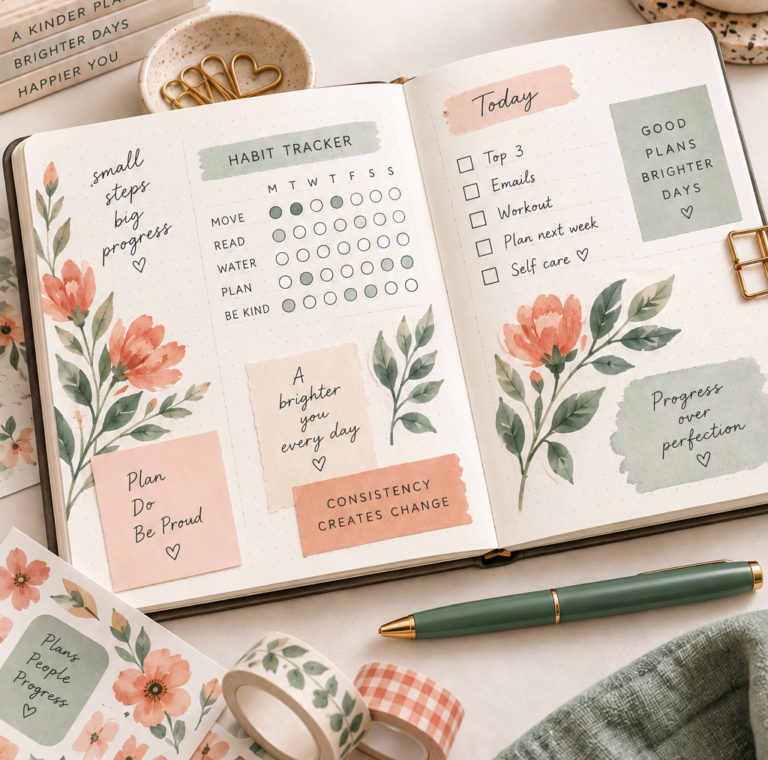
When I first wrote about turning a plain planner page into a proper FUNctional Spread, I got a handful of messages asking the same follow-up question: which stickers should I actually buy? It’s a fair question. “Functional” gets used pretty loosely in sticker shop listings, and it’s easy to end up with a sheet of pretty icons you’ll never actually use on the page.
I’ve spent the past few weeks working through habit trackers, budget sets, and checklist stickers to figure out what earns a permanent spot in my stash. Here’s what I’d tell a friend starting from scratch, plus a round-up of specific kits worth a look across a few price points.
🧩 What Actually Makes a Sticker “Functional”?
A decorative sticker is there to look nice. A functional sticker is there to do a job, whether that’s tracking a habit, marking a due date, or turning a blank box into a mini checklist.

Crafting Her Plans
Ready to plan it all out? We’ve got you.
Head over to the shop for printable planners and journals you can download and start using today.
Browse the shop →The test I use now is simple: if I peeled the sticker off, would the page lose information, not just prettiness? A washi strip along the top of a spread is decorative. A row of tiny tick-box icons next to my weekly goals is functional, because the page tells me less without it.
Most good spreads use both. The functional pieces carry the actual planning, and the decorative pieces make the page feel like yours rather than a template. Neither one is more “correct” than the other, they’re just doing different jobs, and knowing which is which helps you shop with a purpose instead of buying whatever looks nice in a flat-lay photo.
📋 The Core Categories Worth Stocking
You don’t need every sticker sheet a shop sells. A handful of categories cover almost everything a working spread actually needs, and stocking these first will get you further than a big random haul.
Habit and mood trackers. Small repeatable icons, usually laid out as a grid of the same shape, for marking whether you did the thing or how you felt that day. These work best when the icon is small enough to fit a daily box without crowding it. If you’re new to this style of tracking, our guide to using mood trackers in your planner or bullet journal is worth reading before you buy anything, since it’ll help you decide how many rows you actually need.
Icons and checklists. Tiny symbols for recurring tasks (laundry, bins, gym, appointments) plus small tick-box strips you can drop next to any list. These are the workhorses of a functional spread, and they’re the category I reach for most often, because they cover both weekly routines and one-off to-dos with the same sheet.
Budget and finance sets. Coin icons, bill trackers, small “paid” flags, and savings thermometers. These are especially useful if you’re trying to visualise progress toward something specific, like a savings goal, rather than just listing numbers. If you already keep money notes in your journal, our post on using a bullet journal to stay on top of finances pairs well with this category and covers layout ideas these stickers can slot straight into.
Date covers and flags. Small arrow or banner stickers for marking a specific date, deadline, or event without redrawing a box every time. These sound minor but they’re the ones I run out of fastest, since almost every spread ends up needing at least one.
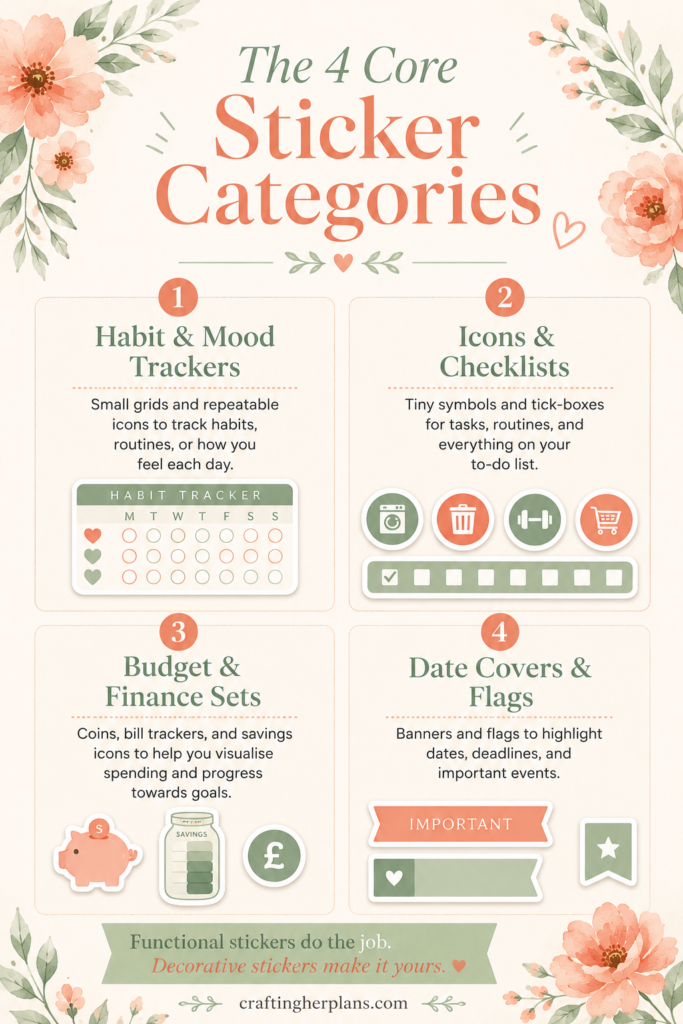
A reasonable starting stash is one sheet from each of these four categories rather than several sheets from just one. That spread gets you further across a whole spread than depth in a single category does.
🔍 What to Look For in Quality
Not all functional sheets are worth the money, and the differences aren’t always obvious from a listing photo, so it helps to know what to check before you buy.
Adhesive strength matters most. Look for “repositionable” in the description if you like to move stickers around before committing, especially for trackers you might resize or shift page to page as your layout changes. Permanent adhesive is fine for one-and-done placements like date flags, but it’s frustrating on anything you expect to adjust.
Matte finish is usually the better choice for functional stickers, since it takes pen and highlighter without smudging the way glossy finishes can. This matters more than it sounds like it would, especially if you tend to tick off habit trackers with a fine-liner rather than just leaving them blank. Save glossy finishes for purely decorative pieces you won’t be writing over.
Kiss-cut sheets (where the sticker is cut but the backing sheet stays whole) are easier to peel cleanly and store flat in a binder or folder. Die-cut sheets (individually cut, no shared backing) look tidier in a flat-lay but can be fiddlier to peel and more prone to curling or catching on each other in storage. Neither is objectively better, it’s really a question of whether you prioritise ease of use or display.
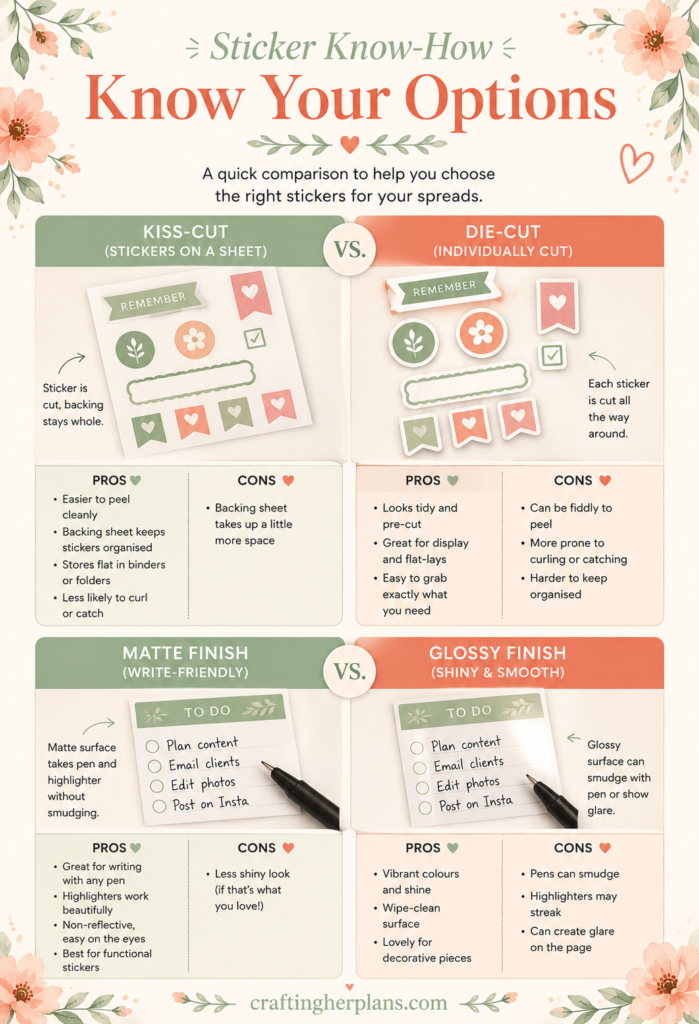
If you’re ordering from a new shop for the first time, a small test sheet is worth the extra cost before committing to a bigger multi-pack. It’s the fastest way to check adhesive and finish against your own writing habits rather than trusting a listing description.
🛍️ A Round-Up Across a Few Price Points
Here’s where I’d actually spend money, roughly sorted from cheapest to most invested.
Budget tier. Multi-pack sticker books aimed at bullet journalers are the best value per sheet, and they’re a low-risk way to try a few categories at once before committing to a specific shop’s style or a single seller’s cut quality. If you’d rather build a stash for free first and spend nothing at all, our piece on finding junk journal ephemera without spending a fortune takes a similar cost-conscious approach, even though it’s written for a different kind of page.
Mid tier. Independent Etsy shops are where I’ve found the best functional-specific designs, since sellers there tend to specialise in one style rather than trying to cover every planner trend at once. Search “habit tracker stickers” or “functional planner stickers” and filter by shop rating and recent reviews, since cut quality varies a lot between sellers even at similar price points. This is also where matte, repositionable sheets are most common, and where you’re most likely to find a set that matches a specific colour palette.
Premium tier. A curated sticker book that bundles habits, budget, and mood tracking into one purchase (Passion Planner’s Functional Trackers Sticker Book is a well-known example) is worth it if you’d rather buy once than piece categories together from several different shops. You’ll pay more per sheet, but you save the time of hunting down matching styles across sellers.
🎨 Mixing Functional Kits With Your Decorative Stash
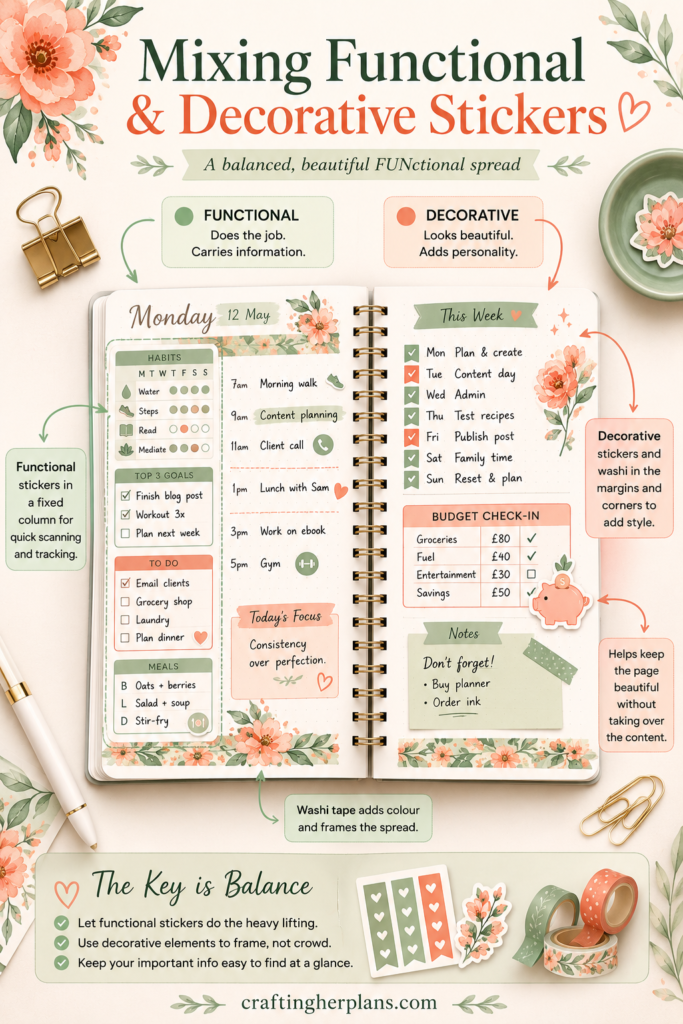
The easiest way to overload a spread is to treat functional and decorative stickers as separate steps instead of one layout. Place your functional pieces first, since they’re anchored to specific information (a date, a habit row, a budget line), then build the decorative layer around them rather than the other way round.
Washi tape is a good bridge between the two. A strip along the edge of a functional grid can frame it without covering any of the tick boxes, which is a trick I picked up while working through the best washi tape for bullet journals and planners. The same logic applies to small decorative stickers: keep them in the margins, not on top of anything you still need to read.
If your page also uses lists (weekly to-dos, packing lists, shopping lists), functional checklist stickers are worth prioritising over decorative ones first, since they’re doing double duty as both decoration and planning. Our round-up of ideas for lists to put in your planner or bullet journal has more on where these fit well if you’re short on layout inspiration.
❓ A Few Quick Questions
Do I need a separate sheet for every habit I’m tracking? No, one general habit tracker sheet with blank icon slots covers most people. Save specific icons (water, exercise, reading) for habits you’re tracking long-term.
Can I use functional stickers in a digital planner too? Yes, many Etsy shops sell the same designs as digital sticker packs for apps like GoodNotes, which is worth checking if you split your planning between paper and screen.
How do I stop functional stickers taking over the whole page? Set a rule for yourself before you start: functional pieces go in a fixed zone (a side column, a header strip) rather than scattered wherever there’s space. It keeps the page readable even on a busy week.
📖 The Bottom Line
None of this needs to be perfect on day one. Start with one sheet from each of the four core categories, buy a small multi-pack or test sheet before committing to a full shop haul, and build out from there once you know what you’ll actually reach for.
A functional sticker earns its place by making a page more useful, not just prettier. If a sheet doesn’t pass that test for how you actually plan, it’s decorative, and that’s fine too, just budget for it separately.
A note on sourcing: this round-up references general categories and shop types rather than a single definitive list, since sticker shop inventory changes often. Always check current reviews before a larger purchase.