
If you have ever stared at a blank weekly spread and felt torn between wanting it to look good and needing it to actually work, FUNctional sticker spreads were built for you. They sit in the middle ground between decorative bullet journaling and no-frills functional planning, using sticker kits to do the heavy lifting so you get colour, structure and personality without hand-lettering a single header.
This guide is the hub for everything in the FUNctional sticker spreads cluster on this site. I will walk through what the format actually is, the supplies that make it work, how to build your first spread from scratch, and the common mistakes I made when I started using this method myself. Along the way I will point you to the deeper dives on specific sticker kit types, planner sizes and seasonal variations as those posts go live.
What Are FUNctional Sticker Spreads?
FUNctional sticker spreads use pre-made sticker kits, rather than hand-drawn icons or washi tape, to build a weekly or daily layout that is both visually satisfying and genuinely useful for tracking your day. The word “functional” is doing real work here. Unlike purely decorative spreads, which can take hours and are often more about the process than the output, a FUNctional spread is built to be filled in quickly and referenced throughout the week.

Crafting Her Plans
Ready to plan it all out? We’ve got you.
Head over to the shop for printable planners and journals you can download and start using today.
Browse the shop →The format grew out of a gap between two existing planning styles. Decorative bullet journaling, the kind you see with elaborate hand-lettered headers and watercolour washes, looks stunning but is time-consuming and intimidating if you are not confident with a paintbrush. Purely functional planning, on the other hand, can feel flat and uninspiring, which makes it easy to abandon after a few weeks. Sticker-based spreads solve both problems at once, since a good kit gives you consistent, professional-looking icons and colour blocking in the time it takes to peel and place a few stickers.
Why Stickers Instead of Drawing
The appeal is speed without sacrificing personality. A five-minute sticker session on a Sunday evening can set up an entire week’s spread, whereas the same layout drawn by hand might take forty-five minutes and require artistic skill you may not have or want to develop right now. Stickers also give you consistency across weeks, since the same icon set shows up in the same style every time, which makes your planner easier to scan at a glance.
There is also a practical honesty to this approach worth naming. I do not have years of hand-lettering practice, and I am not pretending to. This site is built around learning the craft-forward planning approach alongside you, testing formats and sticker kits in real time rather than presenting myself as someone who mastered this years ago.
Building Your First FUNctional Spread
Getting started does not require a huge sticker stash or a specific planner brand. It requires a handful of core supplies and a simple decision-making process for laying out your week.
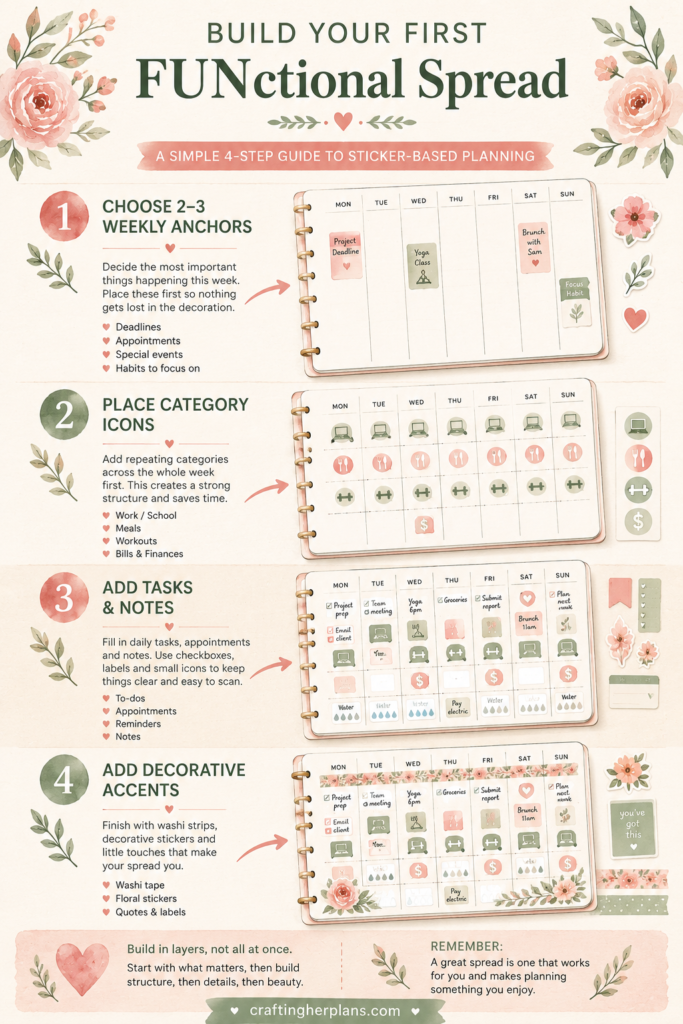
The Core Supplies
At minimum you need a planner or notebook with enough room per day to hold a few stickers without feeling cramped, a basic weekly sticker kit covering everyday categories like appointments, tasks and mood tracking, and a pair of small precision scissors or a craft knife for trimming individual stickers off a sheet. Fine-liner pens in one or two colours are useful for adding quick notes stickers do not cover, but they are optional rather than essential.
Kits vary enormously in what they include, and choosing the right one matters more than buying the most stickers. A beginner kit heavy on decorative flourishes and light on functional icons like “bills,” “appointment” or “workout” will leave you reaching for a pen anyway, which defeats the purpose. Look for kits that mix a small decorative element, such as a washi-style header strip or a few florals, with a solid core of task and category icons.
Laying Out the Week
Start by deciding on your weekly anchors before you touch a single sticker. These are the two or three things that matter most this week, whether that is a work deadline, a birthday, or a habit you are trying to build. Placing these first prevents the common beginner mistake of filling the page with pretty stickers and running out of room for the one appointment you actually needed to track.
From there, work in layers rather than day by day. Place your category icons across the whole week first, such as marking every gym day or every meal-prep slot, then go back through and fill in specific tasks and notes on each individual day. This layered approach keeps the spread visually balanced instead of front-loading Monday with stickers and leaving Friday bare.
Undated formats work particularly well here, since they let you build a spread whenever suits you rather than being locked into a fixed start date. If you are choosing between planner formats for this kind of spread, Planner Sizes: How to Find the Perfect One covers how page dimensions affect how many stickers you can comfortably fit per day, and A5 vs A6 Planner — Which Size Is Actually Right for You? is worth a look if you are deciding between the two most common sticker-friendly sizes.
Choosing the Right Sticker Kit
Not all sticker kits are built for the same purpose, and understanding the categories will save you money and frustration.
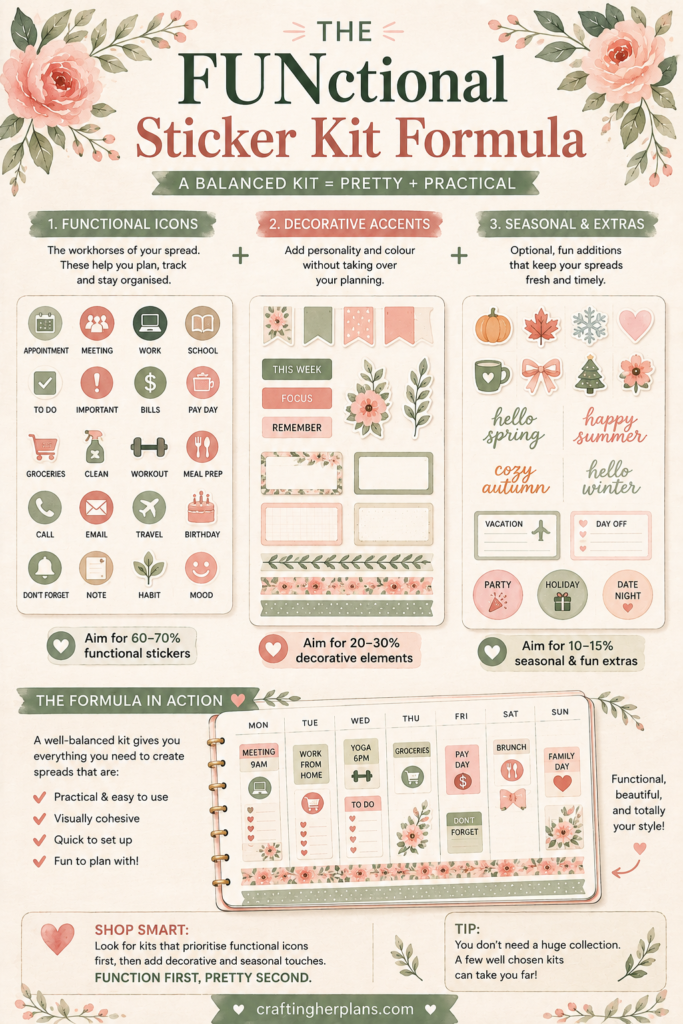
Functional Icon Kits
These focus on everyday categories: work, appointments, self-care, finances, chores and similar. They are the backbone of a FUNctional spread and the first kit type worth investing in. A good functional kit should cover the categories that actually show up in your week, which is a personal question rather than a universal one, so it is worth tracking your actual routine for a week or two before buying. Sticker Kit Essentials for FUNctional Spreads breaks this down kit by kit if you want the full comparison before you buy.
Decorative Accent Kits
These add colour and personality without carrying functional weight, things like floral corners, washi strips and mood-based icons. They should be used sparingly in a FUNctional spread, as a border or accent rather than the main event, since overusing decorative stickers is what tips a spread back into the time-consuming decorative category this format is trying to avoid.
Seasonal and Themed Kits
Seasonal kits swap in holiday-specific icons, such as pumpkin motifs in autumn or heart icons around Valentine’s Day, layered on top of your regular functional set rather than replacing it. I will be covering specific seasonal FUNctional spreads, including autumn and Christmas editions, as dedicated posts within this cluster.
Common Beginner Mistakes
A few patterns show up repeatedly when people first try this format, and knowing them ahead of time will save you some frustration.
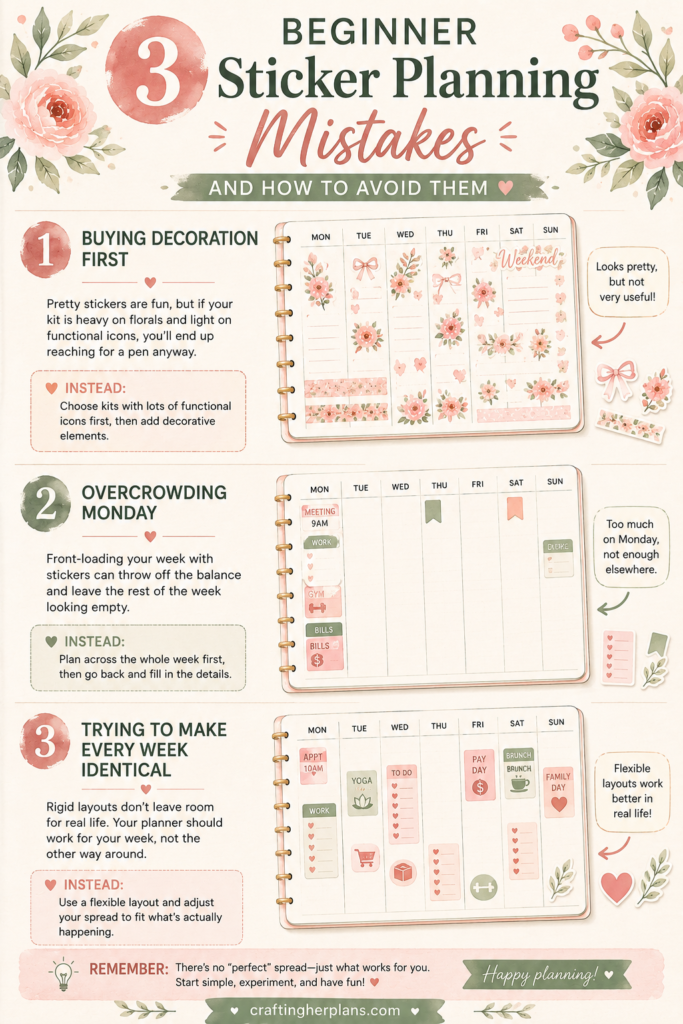
Buying decorative-heavy kits before functional ones is probably the most common mistake, since it is the decorative stickers that look most exciting in a shop listing. Start with a functional-forward kit and add decorative accents afterwards once you know what your week actually needs. Overcrowding a single day is the second common trap, where every sticker for the week ends up jammed into Monday because it is the first day you touch. Working in the layered approach described above largely prevents this.
The third mistake is treating the format as fixed rather than adaptable. Your first few spreads will probably not look like the polished examples you find on Pinterest, and that is fine. The whole point of a functional spread is that it flexes to fit your actual week, not the other way around.
Where FUNctional Spreads Fit in the Bigger Picture
If you are new to planning more broadly, it helps to see where this format sits relative to the wider craft-forward planning approach covered across this site. Junk journaling leans further into the decorative and mixed-media end of the spectrum, using ephemera, ripped paper and paint alongside stickers, and tends to be less about daily tracking and more about creative expression. Junk Journaling vs Scrapbooking: What’s the Difference? goes further into that distinction if you are trying to work out which creative outlet suits you. FUNctional sticker spreads sit closer to the practical end while still keeping the visual satisfaction that makes journaling enjoyable in the first place.
Notebook and journal choice also affects how well this format works. Thicker paper handles multiple layers of stickers without ghosting through to the next page, which is worth keeping in mind if you are shopping for a new notebook specifically to try this method.
What’s Coming Next
This post will keep expanding as new posts go live within the FUNctional sticker spreads cluster. The kit comparison piece, Sticker Kit Essentials for FUNctional Spreads, is already live and linked above. Next up is a piece on five spreads you can set up in under ten minutes, a head-to-head comparison of FUNctional versus fully decorative bullet journaling, and the start of a recurring monthly spread walkthrough series. A broader sticker kit buying guide, covering decorative and seasonal kits alongside functional ones, is also planned as a companion piece to the essentials post above. As each of those posts publishes, I will link them in directly here.
Starting Your Own FUNctional Spread Practice
The best way to know whether this format suits your planning style is to try it for a single week before committing to a full kit collection. Pick one functional-forward sticker kit, choose two or three weekly anchors, and build a single spread using the layered approach above. Notice what worked, what felt cluttered, and what you reached for a pen to add anyway, since that tells you exactly what your next kit purchase should prioritise.
Planning is a practice you build over time, not a system you get right on the first attempt, and that is exactly why this site exists as a running log of what actually works rather than a finished formula.


