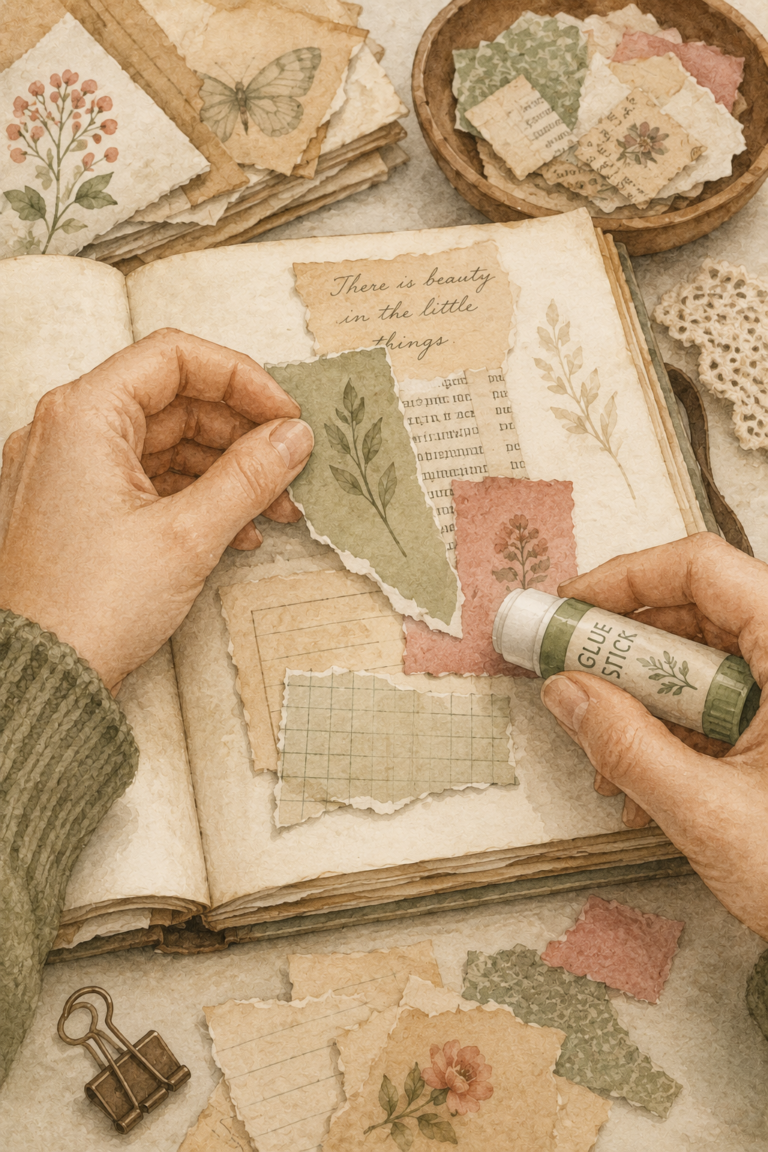
When I first got into junk journaling, I assumed I’d need to buy a big bundle of “ephemera packs” just to get started. It turns out that’s one of the most avoidable expenses in the whole hobby. Most of what fills a beautiful junk journal page is either already sitting around your house or free for the taking, if you know where to look.
This guide walks through the places I’ve actually found ephemera, sorted roughly by cost, so you can build a stash without spending much at all before you decide whether the hobby is worth investing further in.
📚 Old Books and Vintage Pages
Old books are probably the single best source of junk journal ephemera, and they’re often nearly free. Thrift stores routinely sell damaged or water-stained hardbacks for a pound or two, sometimes less if they’re marked for clearance.

Crafting Her Plans
Ready to plan it all out? We’ve got you.
Head over to the shop for printable planners and journals you can download and start using today.
Browse the shop →Library sales are even better, since many libraries sell off withdrawn stock or damaged donations for pennies just to clear shelf space. Look specifically for books that are already too worn to be resold as readable copies, since these are the ones nobody minds seeing cut apart.
What to Look For on the Page
Old dictionaries, hymnals, and vintage novels tend to have the most usable pages, since the paper is often thinner and more textured than modern printing stock. Sheet music and old atlases are also worth grabbing whenever you spot them, since both add instant visual interest to a page without much extra work.
If you’re not sure where to start once you’ve got a stack of source material, our beginner’s guide to junk journaling walks through the basics of turning raw scraps into finished pages.
📦 Everyday Packaging
The second-best source of ephemera is stuff you’d normally throw away. Tea bag envelopes, food wrappers, cereal boxes, and even till receipts all have texture, colour, and print that translate beautifully onto a journal page.
Start saving anything with interesting typography or pattern before you toss it, even if you’re not sure yet how you’d use it. A shoebox by the kitchen bin works well as a simple catch-all until you’re ready to sort through it properly.
Packaging Worth Watching For
Product boxes with foreign-language text or vintage-style branding are especially popular in junk journaling circles, since they add a well-travelled, collected feel to a page. Coffee and tea packaging, in particular, tends to have rich colour and texture that holds up nicely once flattened and trimmed.
Where to Actually Look for Packaging
Beyond your own kitchen bin, ask family and friends to save interesting packaging for you rather than binning it, since most people are happy to hand it over once they know what you’re after. Charity shops sometimes sell off old greetings cards and stationery in bulk bags too, which is another inexpensive way to build up a varied stash quickly.
🎟️ Free Printable Ephemera
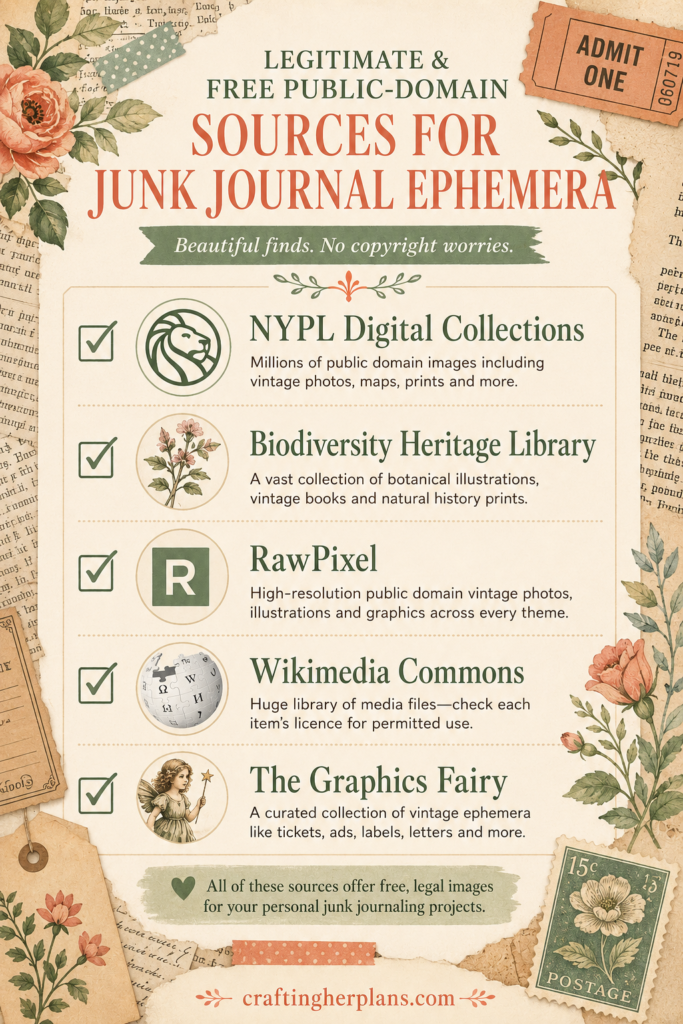
There are genuinely good free sources of printable ephemera online, and this is where a lot of beginners get tripped up by not knowing which sources are actually legal to use. Public domain archives are your safest bet here.
The New York Public Library’s digital collections and the Biodiversity Heritage Library both offer huge libraries of public domain images, from vintage postcards to botanical illustrations, that are free for personal use. Wikimedia Commons is another solid option, though it’s worth checking the specific licence on each image since not everything there is fully public domain.
More Free Sources Worth Bookmarking
Beyond the big library archives, sites like RawPixel host a large collection of high-resolution public domain vintage photos and illustrations that are ready to download and print, covering everything from botanical prints to old postcards. The Graphics Fairy is another long-running favourite among crafters for scanned vintage ephemera, including tickets, letters, and old advertisements.
It’s also worth keeping an eye on independent junk journal creators, many of whom share free printable sheets through Buy Me a Coffee or Ko-fi pages linked in their YouTube video descriptions. These tend to be smaller, more curated sets, which can be a nice complement to the huge public domain archives.
A Quick Word on Copyright
It’s tempting to scan pages out of a book you already own and share or print them freely, but that’s not the same as something being in the public domain. A book’s age matters here too, since copyright terms vary by country, so when in doubt, stick to material that’s explicitly labelled public domain or released under a permissive licence rather than assuming an old-looking page is fair game.
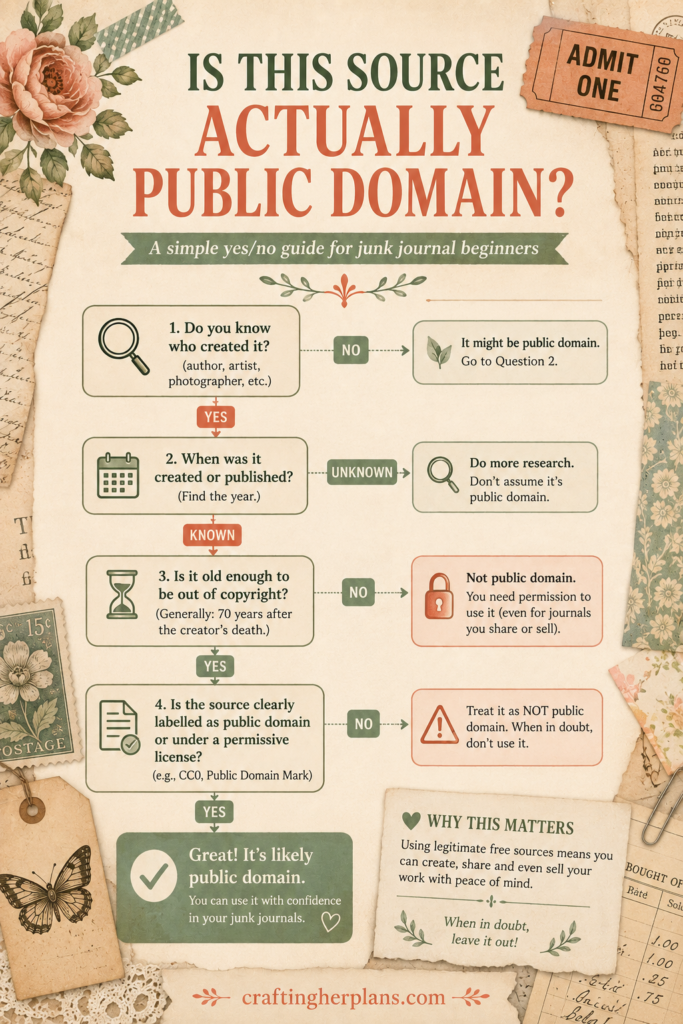
Sticking to legitimate free sources also means you can use what you make with confidence, whether that’s just for your own journal or something you eventually want to share more widely.
🎫 Ticket Stubs and Personal Ephemera
Some of the most meaningful junk journal pages use ephemera that costs nothing at all, because it’s already part of your life. Cinema tickets, train tickets, wrapping paper from a birthday gift, and even old postcards from friends all count.
Start a small habit of tucking these into a drawer or envelope as they come up, rather than trying to remember to save them after the fact. A year of accumulated personal ephemera often ends up being more special in a journal than anything bought or printed, simply because it’s tied to something you actually did.
Building the Habit
The hardest part of collecting personal ephemera isn’t finding it, it’s remembering to keep it instead of automatically binning it. Try keeping a small dedicated envelope somewhere visible, like tucked into a kitchen drawer or a bag you use often, so saving a ticket or receipt becomes a quick habit rather than an extra chore.
Once you’ve got a small collection built up, sort through it every month or two rather than letting it pile up for a year untouched. Sorting little and often makes the eventual page-building process far less overwhelming than facing a shoebox stuffed with a year’s worth of unsorted paper.
Everyday Moments Worth Saving
It’s worth thinking beyond the obvious tickets and postcards too. Handwritten notes, a child’s drawing, a pressed flower from a walk, or the paper sleeve from a bakery treat can all become surprisingly special once they’re tucked into a journal page alongside a short note about the day.
None of this needs to feel precious or curated while you’re collecting it. The point is simply to get into the habit of noticing, since it’s much easier to save something in the moment than to try to recreate the feeling of an ordinary Tuesday months later.
💰 Weighing Free vs. Worth a Small Spend
Not everything needs to be free, and it’s worth being honest with yourself about where a small spend actually saves you time. A pack of vintage-style washi tape or a few sheets of good cardstock, for example, might be worth buying once you know you’re sticking with the hobby.
Where it’s not worth spending is on pre-packaged “ephemera bundles,” since these tend to be markups on material you can source yourself for a fraction of the price once you know where to look. Save your budget instead for the tools that actually make assembly easier, like a decent pair of scissors or a bone folder, rather than the raw material itself.
🗂️ Storing and Organising What You Find
Once you start collecting, scraps pile up fast, and a loose shoebox only works for so long. A simple accordion-style folder with a handful of labelled sections, sorted by colour or material type, keeps everything flat and easy to flip through when you’re ready to build a page.
You don’t need an elaborate system this early on. The goal is just to keep your growing stash from turning into an unsorted pile you avoid digging through, which is often what makes people quietly give up on a new hobby.
Final Thoughts
You genuinely don’t need to spend much to build a rich junk journal ephemera stash. Between old books, everyday packaging, legitimate free printables, and the odds and ends already passing through your life, most people can build a solid working collection within a few weeks without buying a single “ephemera pack.” If you’re still figuring out what other supplies are actually worth owning beyond the ephemera itself, our guide to junk journal supplies is a good next read.
Where have you found your best junk journal ephemera? I’m always looking for new places to check.