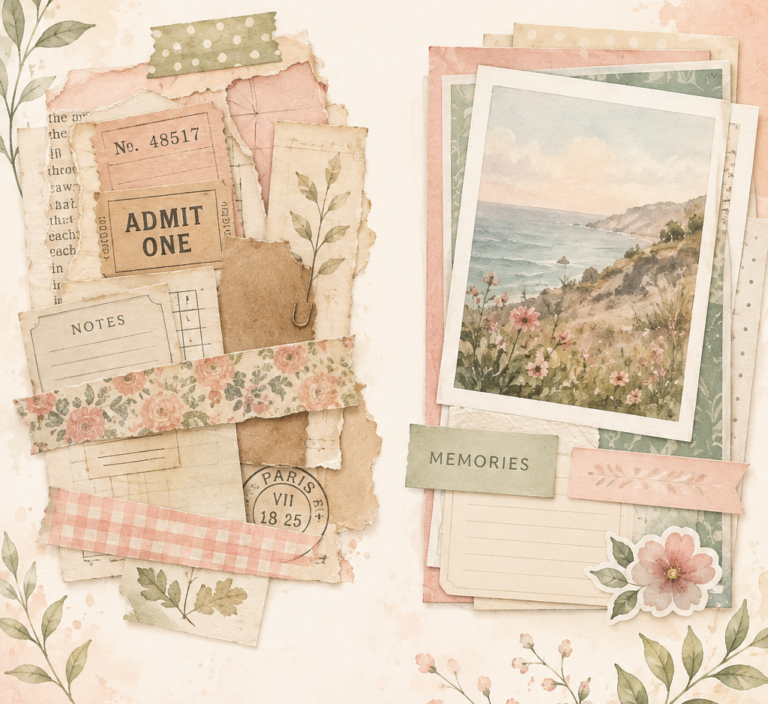
You’ve probably seen them on social media—those gorgeous, layered journals bursting with vintage papers, old receipts, and bits of lace. They look like handmade treasures from another era, yet they’re being created by crafters just like you. This is the world of junk journaling, where nothing is too ordinary to become art.
Junk journaling takes the concept that one person’s trash is another’s treasure quite literally. It’s a form of creative expression that combines elements of scrapbooking, collage, and traditional journaling into something uniquely personal. Unlike the structured approach of bullet journaling or the neat lines of traditional planners, junk journaling thrives on imperfection and spontaneity. Let’s explore how you can start creating these beautiful books from materials you probably already have lying around your house.
What Exactly Is a Junk Journal?
A junk journal is a handmade book created from recycled or repurposed materials that combines writing, collage, and artistic expression. Think of it as a scrapbook and journal that had a creative baby. These journals celebrate the beauty of everyday ephemera—ticket stubs, old book pages, wrapping paper, and even coffee-stained napkins can find new life within their pages.

Crafting Her Plans
Ready to plan it all out? We’ve got you.
Head over to the shop for printable planners and journals you can download and start using today.
Browse the shop →The defining characteristic of junk journals is their unstructured nature. While bullet journals follow specific systems and planners have predetermined layouts, junk journals have no rules. Each page becomes a canvas where you can experiment with layering, textures, and mixed media without worrying about making mistakes.
This freedom makes junk journaling perfect for people who feel intimidated by the pristine pages of traditional journals. There’s something liberating about working with materials that have already lived another life. That coffee ring on an old envelope? It’s not a mistake—it’s character.
The Philosophy Behind Junk Journaling
Junk journaling embraces the Japanese concept of wabi-sabi—finding beauty in imperfection and impermanence. Your journal doesn’t need to look like it came from a craft store. The wrinkled pages, uneven edges, and random collection of papers create a visual story that’s authentically yours.
This craft also connects to sustainable living practices. You’re giving new purpose to materials that might otherwise end up in a landfill. Every junk journal is an act of creative recycling.
Essential Supplies to Get Started
The beauty of junk journaling lies in its accessibility. You don’t need expensive art supplies or specialized equipment to begin. Start with what you have, and build your collection organically as you discover what you enjoy working with.

Basic Starter Kit
Your absolute essentials include notebook paper or any paper you have available, a glue stick or liquid glue, scissors, and a pen. That’s it. Seriously. You could create a junk journal right now with just these four items. However, having a few additional tools will expand your creative possibilities.
Consider adding washi tape to your collection early on. Washi tape for bullet journals works perfectly in junk journals too, offering an easy way to add color and pattern without mess. A paper trimmer saves time and creates cleaner edges, though scissors work fine when you’re starting out.
Paper and Materials to Collect
Start looking at paper differently. Scrapbook paper and cardstock provide sturdy bases for your pages, but don’t stop there. Book pages from damaged books create a vintage aesthetic, while music sheets add visual interest even if you can’t read music. Save envelopes, old greeting cards, and junk mail for their interesting textures and patterns.
Wallpaper samples from home improvement stores often have beautiful designs. Parchment paper, tissue paper, and even paper doilies can add delicate layers to your pages. The key is variety—different weights, textures, and patterns create visual interest when layered together.
Decorative Elements
Think beyond traditional scrapbooking supplies. Ribbons and lace add softness and dimension. Dried flowers or leaves pressed between pages create natural beauty. Tags from clothing, tea bags, and vintage postcards all have potential. Stickers designed for planners work beautifully in junk journals too.
Metallic markers and paint pens let you add highlights and details. Watercolors or acrylic paints can transform plain pages into backgrounds worth keeping. If you enjoy art journaling, many of the same supplies transfer perfectly to junk journaling.
How to Create Your First Junk Journal
Starting your first junk journal doesn’t require mastering complex bookbinding techniques. You can begin with simple methods and work your way up to more elaborate structures as your confidence grows.
Simple Binding Methods
The easiest way to start is with a three-hole pamphlet stitch. Fold several sheets of paper in half, punch three holes along the fold, and thread them together with yarn, ribbon, or waxed thread. You can learn this technique in under fifteen minutes, and it creates a surprisingly sturdy binding for journals with modest page counts.
If sewing isn’t your thing, try making a no-sew journal. Stack your papers and fold them in half, then use binder clips to hold the pages together. You can cover the clips with decorative tape or create a fabric spine that hides the hardware while adding visual appeal.
Creating Covers from Recycled Materials
Your journal’s cover sets the tone for everything inside. Cereal boxes and other food packaging boxes provide sturdy covers that you can decorate to your heart’s content. Old greeting cards already have beautiful designs—just fold them to size and add a spine. Even padded envelopes have interesting textures that create unique covers when turned inside out.
Consider covering your base with fabric scraps, wallpaper, or decorative paper. Add a ribbon to tie the journal closed, or attach elastic to create a band that wraps around the cover. The cover is your first opportunity to make the journal uniquely yours.
Deciding on a Theme or Purpose
Some junk journals benefit from having a guiding theme or purpose. You might create one specifically for travel memories, another for daily reflections, or one that serves as a catch-all for whatever inspires you on any given day.
Themed journals help focus your material collection. A reading journal in junk journal style might include pages from favorite books, bookmarks, and notes about stories that moved you. A garden journal could incorporate seed packets, pressed flowers, and notes about what thrived each season.
That said, some of the most interesting junk journals have no theme at all. They become visual diaries where anything goes—a mashup of collected papers that tells the story of your life through the things you saved.
Page Ideas and Creative Content
The pages of your junk journal tell your story through both what you include and how you arrange it. This is where the magic happens—where disparate pieces come together to create something meaningful.
What to Include in Your Pages
Start saving the ephemera of your daily life. Ticket stubs from movies or concerts carry memories of experiences. Receipts from meaningful purchases or special meals mark moments worth remembering. Magazine cutouts, whether images or interesting text, can spark creativity or preserve ideas.
Personal notes and letters add authenticity. Sheet music or lyrics from songs that moved you create emotional connections. Bookmarks save specific memories of what you were reading during different life phases. Even wrapping paper from gifts becomes a way to remember celebrations and the people who gave them.
Creating Dimension and Interest
Layering is the secret to compelling junk journal pages. Start with a base paper, then add elements on top. Overlap corners, leave some edges loose, and create pockets by gluing only three sides of an element. These techniques add physical depth that makes pages more interesting to explore.
Flaps and fold-outs create interactive elements. A folded piece of paper can hide journaling underneath, or an envelope can hold small mementos. Pockets made from old envelopes or folded paper give you places to tuck additional items—photos, notes, or other small keepsakes.
Adding Personal Touches
Your journal becomes truly yours when you add your own thoughts and observations. Write journal entries about your day, copy quotes that resonate with you, or jot down ideas and dreams. Add sketches and doodles in empty spaces, even if you don’t consider yourself an artist. Journal prompts from your regular journaling practice can inspire entries in your junk journal too.
Patterns and decorative elements fill awkward spaces and tie pages together visually. A simple border around the edge of a page, repetitive doodles in margins, or stamped images can transform blank areas into intentional design choices. The goal isn’t perfection—it’s creating pages that feel complete and interesting to you.
Tips and Techniques for Beginners
As you start your junk journaling journey, remember that this craft rewards experimentation and forgives mistakes. Every “oops” moment can become an opportunity for creative problem-solving.

Embrace Imperfection
This bears repeating because it goes against so much of what we learn in school and life: there are no rules in junk journaling. If a page doesn’t look the way you imagined, you can cover it with something else. If you spill coffee on a page, that’s now a coffee-stained vintage aesthetic. The wrinkled pages, crooked gluing, and uneven cuts aren’t flaws—they’re evidence that a real human made this with their own hands.
Many beginners struggle with the fear of ruining their journal. Here’s a secret: you can’t ruin it. Unlike feelings journals where you might worry about saying the wrong thing, or planners where mistakes disrupt your schedule, junk journals absorb everything. That anxiety about perfection? It doesn’t belong here.
Learning Resources and Inspiration
Video tutorials excel at teaching practical techniques. Watching someone actually fold an envelope into a pocket or create a particular binding makes these techniques accessible in ways that written instructions sometimes can’t match. Look for channels that focus on beginner projects and work your way up to more complex designs.
Online communities provide support and inspiration. Facebook groups, Reddit communities, and Instagram hashtags connect you with other junk journalers at every skill level. Don’t hesitate to ask questions or share your attempts—these communities typically welcome beginners enthusiastically.
Start Small and Build Confidence
Your first project doesn’t need to be an elaborate masterpiece. Make a small notebook using a single-signature binding (that’s bookbinding speak for one group of folded pages sewn together). Alter an existing book by adding pages and decorations to it. Create a simple envelope mini-album that you can complete in an afternoon.
These smaller projects let you practice techniques without overwhelming time commitments. You’ll learn what you enjoy, what works with your aesthetic, and what techniques you want to explore further. Each small project builds skills and confidence for more ambitious creations later.
Collecting Materials Mindfully
Once you start junk journaling, you’ll see potential materials everywhere. That’s wonderful, but it can also lead to overwhelming collections of paper if you’re not careful. Create a system for organizing your finds—sort by color, type, or theme depending on what makes sense for how you work.
Quality matters more than quantity. A few pieces you truly love will inspire more creativity than boxes full of papers you feel obligated to use. Be selective. Ask yourself whether a piece speaks to you before adding it to your collection. This mindfulness prevents the paradox of having too many choices, which can actually stifle creativity.
The Benefits Beyond the Craft
Junk journaling offers rewards that extend beyond the beautiful books you create. The process itself provides benefits for mental health, creativity, and sustainable living.
Creative Expression and Stress Relief
The tactile nature of working with papers, glue, and various materials engages your hands and mind in ways that screen time can’t replicate. Like morning journaling, the practice of creating in your junk journal can become a meditative ritual. The focused attention required to arrange elements on a page quiets anxious thoughts and grounds you in the present moment.
There’s also something inherently satisfying about making something physical that will last. In our digital world, creating a tangible book you can hold and flip through offers a different kind of fulfillment. It’s a reminder that you can create beauty with your own hands.
Memory Keeping with Purpose
Junk journals preserve memories in a more engaging way than photo albums alone. The combination of visual elements, written reflections, and three-dimensional objects creates a richer record of experiences. When you look back at a page months or years later, the layered elements trigger memories more effectively than a single photo might.
This makes junk journaling particularly powerful for documenting important life transitions, travels, or creative projects. The process of selecting and arranging materials helps you process experiences and understand what truly mattered about a moment or period in your life.
Sustainable Creativity
Every piece of junk mail you transform into art is something that doesn’t go immediately into recycling or landfill. Old books too damaged to read can still offer their pages to new creative projects. Scraps from other crafts find purpose instead of cluttering drawers. This alignment with sustainable practices makes the craft feel meaningful beyond personal enjoyment.
You’re not just making art—you’re demonstrating that creativity doesn’t require consuming new resources. This mindset often spills over into other areas of life, making you more conscious of waste and more creative about repurposing items generally.
Your First Steps Forward
You now have everything you need to start your junk journaling journey. The knowledge, the permission to make it imperfect, and the understanding that you can begin with materials you already have. What’s stopping you?
Start by gathering some basic supplies—paper, glue, scissors, and a pen. Look around your home for papers with interesting textures or patterns. That old calendar, those wrapping paper scraps, the greeting cards in your drawer—they’re all potential materials. Create a simple binding or even just fold some papers together and start gluing things down.
Give yourself permission to experiment. Your first journal doesn’t need to look like the polished examples you see online. Those creators have been practicing for months or years. They started where you’re starting, with uncertain hands and papers that didn’t cooperate. The difference between them and you is simply that they kept going.
Remember, creative journaling comes in many forms, and junk journaling is just one expression of that creativity. If this style doesn’t resonate with you, that’s fine—but if the idea of turning everyday scraps into something beautiful excites you, don’t wait. Start today with whatever you have available. Your future self will thank you for capturing these moments, mistakes and all.
Continue Your Journey
Ready to expand your creative practice? Explore these related guides:
- How to Bullet Journal for Beginners – Learn another popular journaling system that complements junk journaling techniques
- Best Journals for Art Journaling – Discover the best paper types and journal structures for mixed media work
- Creative Journal Ideas – Find inspiration for different types of creative journaling practices
- Journal Prompts for Inspiration – Get writing ideas to fill those junk journal pages with meaningful reflections
- Lists to Include in Your Planner or Journal – Practical content ideas that work beautifully in junk journal formats
What will you create first? Will you start with a simple folded mini-journal, or dive into creating pockets and flaps? Share your junk journaling plans or questions in the comments below!
Ready to discover more creative planning and journaling techniques? Join our community for weekly inspiration, practical tips, and exclusive templates delivered straight to your inbox. Subscribe to our newsletter and never miss a creative idea.