Inside: A creative journal is like a bullet journal but aimed at creative talents, expanding your ideas and making sure you don’t forget click to find out more
Whether you are someone that thinks of themselves as creative or not, all of us have that ability to make something, to create something. Often the hardest part is harnessing that creativity and putting it to use – and that’s why often label ourselves as ‘not creative’.
One way to possibly help boost your creativity is with a creative journal. But what is it and how does it work?

Crafting Her Plans
Ready to plan it all out? We’ve got you.
Head over to the shop for printable planners and journals you can download and start using today.
Browse the shop →What is a creative journal?
A creative journal is a bit like a bullet journal but less about how you feel or what you need to do this month and more about your creativity, solving problems, brainstorming ideas and also practising that creativity.
For example, lots of people use them as a place to refine and practice their creative skills. Because even for the most naturally creative person, there is still learning, practice and fine-tuning. For the rest of us, we get better by doing and we maintain the skills through use.

The free-flowing nature of a creative journal means it is less a formal system like a bullet journal and more like a sketchbook, notebook or collection of papers kept together. It can be what you need it to be and it should always work for you so finding your own system is key.
How to start a creative journal
One of the hardest parts can be starting a creative journal – where do you begin? One of the first steps is to decide how you want to use the journal. Will it be somewhere to record ideas or just to practice skills? Will you set goals and objectives for your work in it?
Free writing is one good technique to start a creative journal. Write down everything that comes to your mind to clear it out. This will help you define what you want to do next.
Other ideas to use to start the journal can include looking at things like what inspires you, what scares you or what was the last fun thing you did?
5 styles of creative journaling
If you are looking for something a little more formal as inspiration for your creative journal, here are five styles that are used by different kinds of creative people that might work for you.
1. Written journal
A written journal is the most popular and can be used for free writing as mentioned or just to jot down a wide range of experiences, thoughts and ideas. The focus is more on things you will create rather than day to day life experiences in the way a bullet journal is used.

2. Art journal
This is popular with artists or graphic designers where they draw, paint or even take pictures or cuttings of things they see that inspire them. It can then be used as inspiration or to get creative juices flowing when creating something.
3. Scrapbooking
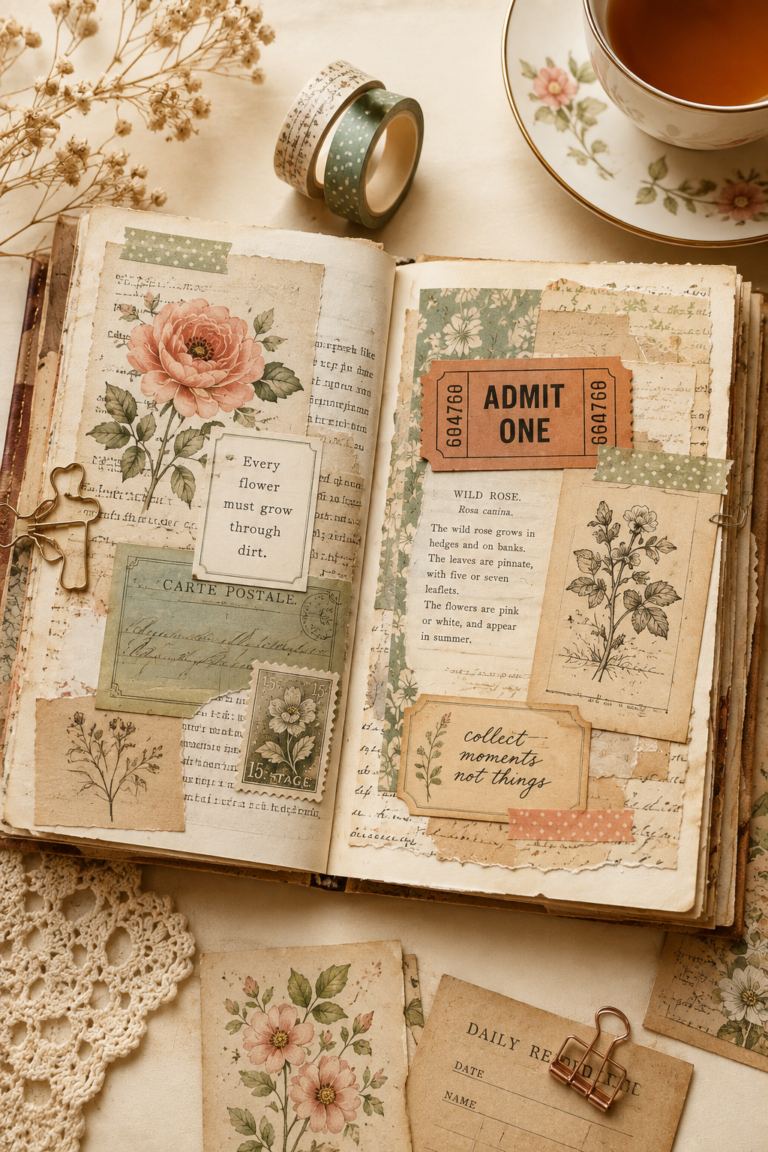
Scrapbooking is often used to keep photos and mementoes but can also be used to record inspiration and ideas. Cut out things like images, quotes or print them from the internet and use them in your scrapbook for inspiration.
4. Prompt journal
You can get loads of prompts on the internet to help with journaling or even buy journals that come with prompts in them. The idea is that you get a question or a thought for each day to help you create something in the journal and is great for stimulating the brain.
5. Mind mapping
Mind mapping is great to work through the flow of an idea and to help you see how all the pieces connect together. You could write the main idea and start connecting sub ideas and themes to it. Then you can expand from there, adding more and maybe even finding new topics or themes to consider.
Journaling ideas to boost creativity
Once you have made a start and have some content in your creative journal, you can look to expand into new areas and help stimulate your brain with new ideas and avenues.
Drawing is something that lots of people can use, even if you don’t think of yourself as artistic. Sketches of little stick figures can work! But whatever you create, you are exercising the brain, and this can lead to new ideas.

While a creative journal is usually different from a bullet journal, there’s nothing to say you can’t use it to document hopes and fears. Perhaps think about them from the view of your creative work – what you want to achieve, what you are worried about, things you want to learn or develop.
Clear your mind
We all forget stuff and when that is something we could use in our business or hobby, it can be very frustrating. By using tools such as a creative journal, you can reduce the risk of this happening as well as boosting your mind and finding new ways to solve those creative problems.
Have you ever used a creative journal of any kind? I’d love to hear about it in the comments below!